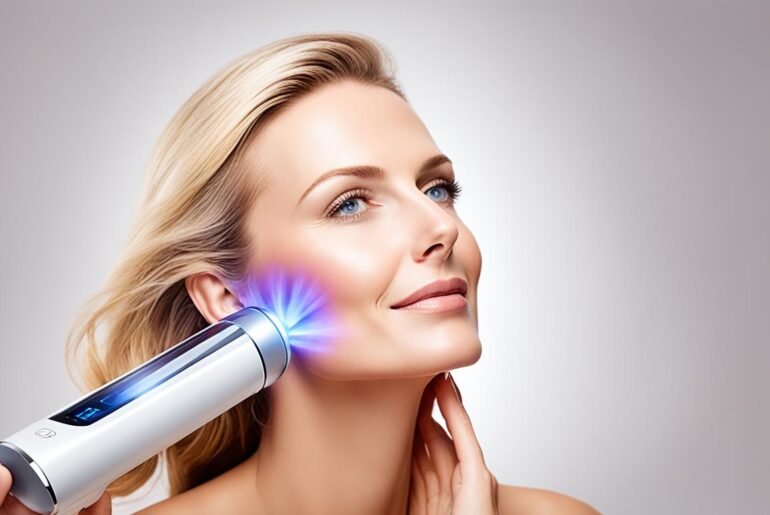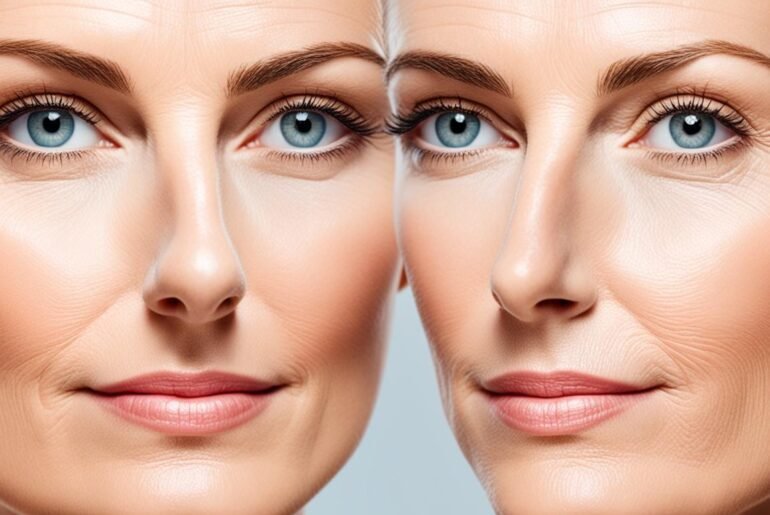
Did you know that laser skin treatments can effectively brighten your skin and reveal a radiant, even-toned complexion? It’s true! Laser skin rejuvenation procedures, such as laser skin resurfacing and skin rejuvenation treatments, use advanced laser technology to target the skin’s outer layer or break down pigment-producing melanin. This results in a lighter appearance of blemishes and darker patches, making laser treatment an excellent choice for addressing age spots, melasma, and overall sun damage.
Key Takeaways:
- Laser skin treatments are non-invasive, advanced procedures for skin brightening.
- These treatments target the skin’s outer layer or break down melanin to lighten blemishes.
- They are effective for age spots, melasma, and sun damage.
- Types of lasers used for skin brightening include Clear + Brilliant®, Fraxel Dual®, and PicoSure™.
- Laser skin treatments offer long-lasting results with minimal downtime.
Types of Lasers for Skin Lightening
At Laser & Skin Surgery Center of New York, we offer a variety of state-of-the-art laser technologies for effective skin lightening treatments. Our range of lasers includes:
Clear + Brilliant®
Clear + Brilliant® is designed to address pigmentation and anti-aging concerns, leaving your skin looking brighter and more youthful.
Clear + Brilliant Permea
Clear + Brilliant Permea is a gentle treatment that replaces damaged skin with a healthier dermal layer, resulting in a brighter and more radiant complexion.
Fraxel Dual®
Fraxel Dual® is a versatile laser that stimulates collagen and elastin production, improving skin tone, and texture for a more youthful appearance.
LaseMD
LaseMD is an innovative laser treatment that works on a cellular level to renew the skin and minimize dark patches, revealing a brighter and more even complexion.
nd:YAG
The nd:YAG laser is a versatile option for lightening skin discoloration, as it effectively breaks up pigment without causing damage to surrounding tissues.
PicoSure™
PicoSure™ is a cutting-edge laser technology that targets unwanted pigment, helping you achieve clearer and brighter skin.
PicoPlus™
PicoPlus™ is a laser treatment that specifically targets pigment without damaging the surrounding skin, resulting in a more even skin tone.
Ruby laser
The Ruby laser is a highly effective treatment for pigmentation, offering visible improvements within days and minimal downtime.
| Laser | Treatment Benefits |
|---|---|
| Clear + Brilliant® | Targets pigmentation and anti-aging concerns |
| Clear + Brilliant Permea | Replaces damaged skin with a healthier dermal layer |
| Fraxel Dual® | Increases collagen and elastin to improve skin tone and texture |
| LaseMD | Renews skin from within by treating dark patches on a cellular level |
| nd:YAG | Breaks up pigment without damaging surrounding tissue |
| PicoSure™ | Breaks up unwanted pigment for clearer and brighter skin |
| PicoPlus™ | Targets pigment without damaging the skin |
| Ruby laser | Treats pigmentation with minimal downtime and visible improvements within days |
Pros and Cons of Using Lasers to Lighten Your Skin
Using lasers for skin lightening offers several advantages. It is a non-invasive treatment that effectively addresses a wide range of pigmentation and aging concerns. Laser treatments provide visible results with just a few sessions and stimulate collagen production, which leads to continued improvement in the skin’s texture and tone over time.
One of the key benefits of laser skin lightening is the minimal downtime it entails. Unlike more invasive procedures, laser treatments allow you to resume your daily activities almost immediately after the session. This makes them a convenient option for individuals with busy schedules.
Furthermore, laser treatments are highly customizable. They can be tailored to suit individual skin types and goals, ensuring optimal outcomes. With short procedure times and quick onset of results, laser skin lightening is a time-efficient solution for those seeking visible and long-lasting improvements.
“Using lasers for skin lightening provides visible results with minimal downtime, making it a convenient and effective treatment option for individuals.”
Pros of Laser Skin Lightening:
- Non-invasive treatment
- Visible results
- Continued collagen production
- Minimal downtime
- Customizable treatments
- Short procedure times
- Long-lasting results
Cons of Laser Skin Lightening:
- Potential risks and complications
While laser skin lightening offers numerous benefits, it is important to consider the potential risks and complications. These can include scarring or hyperpigmentation if the treatment is performed by an inexperienced provider, and possible complications if aftercare instructions aren’t followed correctly. It is crucial to choose a qualified professional who can assess your skin type and perform the procedure safely.
It is also worth noting that multiple treatment sessions may be required to achieve the desired results. Laser skin lightening is a gradual process, and individual responses may vary. Therefore, patience and adherence to the recommended treatment plan are key to achieving optimal outcomes.
Overall, laser skin lightening offers a non-invasive and effective solution for individuals looking to brighten their skin and address pigmentation concerns. When performed by a qualified professional and with proper aftercare, laser treatments can significantly improve the skin’s texture, tone, and overall appearance.
| PROS | CONS |
|---|---|
| Non-invasive treatment | Potential risks and complications |
| Visible results | |
| Continued collagen production | |
| Minimal downtime | |
| Customizable treatments | |
| Short procedure times | |
| Long-lasting results |
Potential Risks and Complications of Laser Skin Lightening
Laser skin lightening treatments can be effective for improving skin tone and reducing pigmentation concerns. However, it’s important to be aware of the potential risks and complications associated with these procedures. While laser skin lightening is generally safe when performed by a qualified professional, there are temporary side effects that may occur.
One common side effect is redness and swelling in the treated area. This is a natural response to the laser energy and typically subsides within a few days to a week. Bruising may also occur due to the heat generated by the laser, but it usually resolves on its own.
Another potential side effect is crusting, which happens when the treated skin forms a scab-like crust during the healing process. This is a normal part of the skin’s healing response and will typically resolve within a week or two. In some cases, there may be blistering, which can be a sign of a more severe reaction. It is important to consult with your dermatologist if blistering occurs.
It is crucial to choose a board-certified dermatologist with experience in performing laser skin lightening treatments. This ensures that the procedure is done correctly and reduces the risk of complications. Qualified professionals can assess your skin type and determine the appropriate laser settings for your specific needs.
Overall, while laser skin lightening treatments may have temporary side effects, they are generally safe and effective when performed by a qualified professional. It’s essential to follow post-treatment care instructions provided by your dermatologist to minimize the risk of complications and promote optimal healing.
Potential Risks and Complications of Laser Skin Lightening
| Potential Risks and Complications | Description |
|---|---|
| Redness and swelling | A common side effect of laser skin lightening treatments that usually resolves within a few days to a week. |
| Bruising | May occur due to the heat generated by the laser but typically resolves on its own. |
| Crusting | The formation of a scab-like crust on the treated skin, which is a normal part of the healing process and resolves within a week or two. |
| Blistering | In some cases, a more severe reaction may occur, leading to blistering. It is important to seek medical attention if blistering occurs. |
Consult with a board-certified dermatologist to understand the potential risks and complications associated with laser skin lightening treatments. They can assess your skin type and provide appropriate recommendations to achieve optimal results safely.
What to Expect During Laser Skin Lightening
During laser skin lightening treatments, patients can expect a comfortable and efficient procedure that aims to reduce hyperpigmentation and reveal a more even skin tone. It’s important to understand the process and what to expect during your laser skin lightening treatment.
Wearing Goggles for Eye Protection
Before the laser treatment begins, your provider will provide you with goggles to wear. These goggles are designed to protect your eyes from the laser light, ensuring your safety throughout the procedure.
Tingling Sensation During Treatment
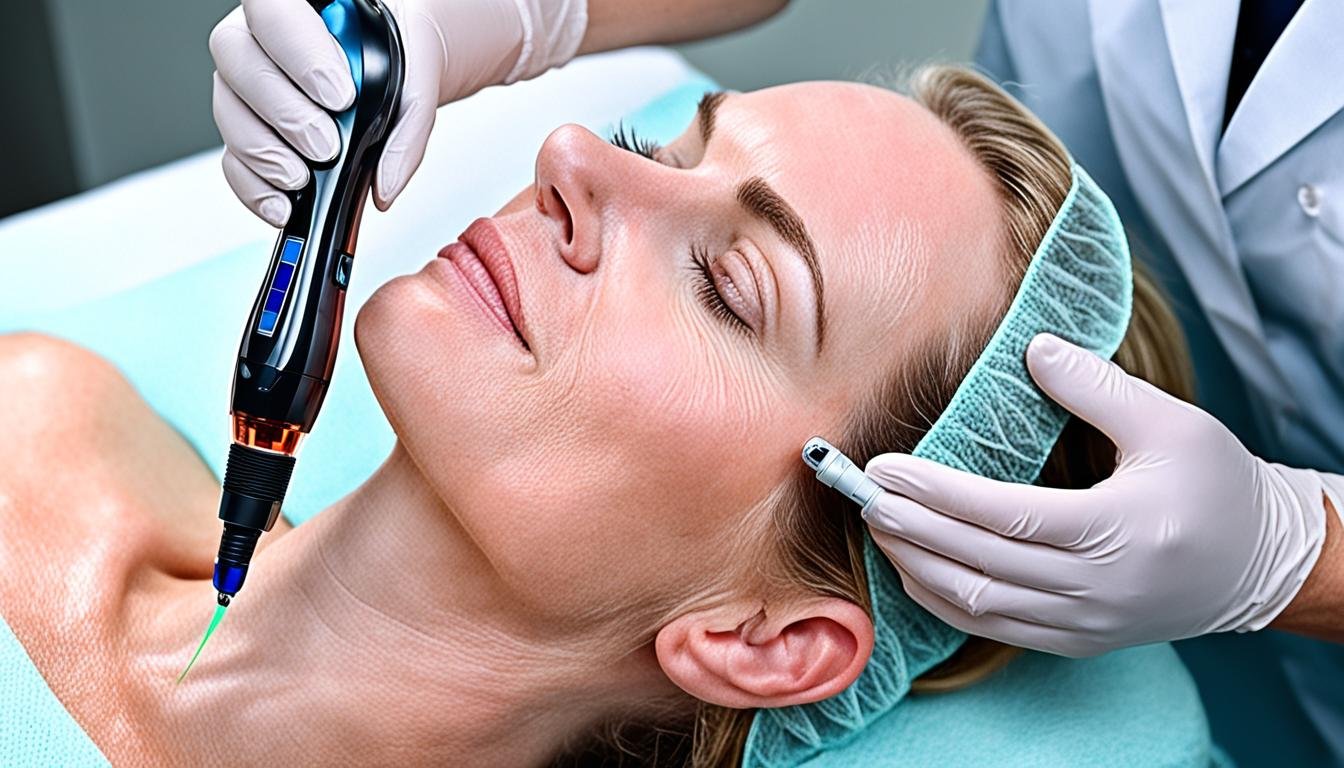
As the handheld laser device passes over the areas of your skin with hyperpigmentation, you may experience a mild tingling or snapping sensation. This sensation is normal and temporary, indicating that the laser is effectively targeting the pigmentation.
Topical Numbing Cream for Enhanced Comfort
To enhance your comfort during the treatment, your provider may apply a topical numbing cream to the treatment area. This cream helps to minimize any potential discomfort or pain you may feel during the procedure.
Cooling the Treatment Area with Cold Air
In addition to the topical numbing cream, a jet of cold air may be used to cool the treatment area. This helps to further reduce any discomfort and keeps the skin at a comfortable temperature during the procedure.
Treatment Time and Duration
The duration of each laser skin lightening treatment session can vary depending on factors such as the device used, your skin type, and the condition being treated. Typically, each session lasts around 30 minutes, providing a quick and convenient treatment option.
Aftercare for Optimal Results
After the laser treatment, your provider will provide you with specific aftercare instructions to follow. These instructions may include avoiding direct sun exposure, applying recommended skincare products, and avoiding certain activities that may irritate the treated area. Proper aftercare is essential for accelerating healing and optimizing results.
Follow-up appointments may also be scheduled to monitor your progress and ensure that you are achieving your desired outcomes. Your provider will work closely with you to create a personalized treatment plan that suits your specific needs and goals.
| Laser Skin Lightening Process | What to Expect |
|---|---|
| Wearing goggles | Protection for your eyes from laser light |
| Tingling sensation | Mild tingling or snapping sensation during treatment |
| Topical numbing cream | Enhanced comfort during the procedure |
| Cold air | Jet of cold air to cool the treatment area |
| Treatment time | Around 30 minutes per session |
| Aftercare | Follow specific instructions provided by your provider |
Alternatives to Laser Skin Lightening

If laser skin lightening is not suitable or preferred, there are alternative treatment options to consider. These alternatives provide effective solutions for improving skin pigmentation and texture without relying on laser technology. Some popular alternatives include:
Chemical Peels
Chemical peels are a non-invasive option for improving skin pigmentation and texture. During the treatment, a chemical solution is applied to the skin, which causes the top layer to peel off, revealing a fresh layer of skin with reduced pigmentation. Chemical peels can be customized based on individual skin needs, targeting specific concerns such as hyperpigmentation and sun damage.
Microneedling
Microneedling is a procedure that involves using a device with tiny needles to create controlled micro-injuries on the skin’s surface. These micro-injuries stimulate the skin’s natural healing process, leading to collagen production and improved skin texture. Microneedling can also help enhance the absorption of topical products, maximizing their efficacy for skin lightening.
Topical Products
Topical products containing ingredients like retinoids and hydroquinone can be used as an alternative to laser skin lightening treatments. Retinoids help promote cell turnover and lighten dark spots over time, while hydroquinone inhibits the production of melanin, reducing pigmentation. These products are usually applied daily and can be part of a comprehensive skincare routine to achieve brighter and more even-toned skin.
Prior to considering these alternatives, it is essential to consult with a board-certified dermatologist. A dermatologist can evaluate your skin condition and recommend the most suitable alternative treatment based on your specific needs and goals.
| Alternative | Description | Benefits |
|---|---|---|
| Chemical Peels | Exfoliates skin and improves pigmentation | – Customizable based on individual needs – Targets hyperpigmentation and sun damage |
| Microneedling | Stimulates collagen production for improved texture | – Enhances absorption of topical products – Safe and non-invasive procedure |
| Topical Products | Contain ingredients that lighten and brighten the skin | – Retinoids promote cell turnover for lighter skin – Hydroquinone inhibits melanin production |
How Do Lasers Lighten Skin Discoloration?
Laser technology offers an effective solution for lightening skin discoloration by targeting melanin, the pigment responsible for skin color. By utilizing the unique properties of light, lasers can diminish specific targets known as chromophores in the skin, resulting in a more even skin tone.
Melanin: The skin pigment that absorbs light at various wavelengths, contributing to differences in skin color.
Laser treatments work by emitting a focused beam of light energy onto the skin. This light energy is absorbed by the melanin in the pigmented areas of the skin.
| Laser Technology | Targeted Chromophores | Action |
|---|---|---|
| Various types of lasers | Melanin | Heating and diminishing chromophores |
As the melanin absorbs the laser energy, it heats up and breaks apart, leading to a lightening of the skin discoloration. The surrounding skin is generally unharmed during the process.
One crucial factor in achieving successful results is the pulse duration of the laser. Shortening the pulse duration allows for more accurate targeting of pigmentation, minimizing the potential risks and complications associated with the treatment. Additionally, utilizing conservative treatment settings, such as low energy levels and short pulse durations, can help reduce heat production that may affect surrounding cells and tissues, resulting in a safer and more effective treatment.
Conservative treatment settings, such as low energy levels and short pulse durations, minimize the risk of complications and rebound pigmentation.
By customizing laser treatments based on the individual’s skin type and pigmentation concerns, dermatologists can provide conservative yet effective approaches to minimize the risk of complications and ensure successful outcomes.
Which Types of Lasers Are Used for Skin Lightening Treatments?
When it comes to skin lightening treatments, various types of lasers are used, each offering unique characteristics and effectiveness. Let’s explore the different laser options available:
Fractional Non-Ablative Lasers
Fractional non-ablative lasers, such as the 1550/1540mm, have gained FDA approval for treating melasma and have shown promising results. These lasers work by targeting the deeper layers of the skin while leaving the outer layer intact, stimulating collagen production and evening out skin tone.
Low-Fluence Q-Switched Nd-YAG Laser
The low-fluence Q-switched Nd-YAG laser has been widely studied for melasma treatment, although it is not FDA-approved for skin hyperpigmentation. This laser targets melanin in the skin, helping to reduce pigmentation and improve overall skin tone.
Intense Pulsed Light (IPL)
Intense pulsed light (IPL) is another light-based therapy commonly used for skin lightening. IPL targets specific chromophores, including melanin, to improve melasma and other forms of skin hyperpigmentation. IPL is often combined with other treatments for optimal results.
Ablative Lasers
Ablative lasers, such as CO2 and ER-YAG lasers, are effective for certain types of skin hyperpigmentation. However, they are not recommended for melasma or post-inflammatory hyperpigmentation (PIH) due to the risk of exacerbating pigmentation issues.
It is important to consult with a qualified dermatologist to determine the most suitable laser treatment for your specific skin concerns. They will be able to assess your skin type and condition and recommend the appropriate laser therapy for optimal results.
| Laser Type | Target | Approved for Melasma? | Effectiveness |
|---|---|---|---|
| Fractional Non-Ablative Lasers | Deep layers of the skin | Yes | Good results |
| Low-Fluence Q-Switched Nd-YAG Laser | Melanin in the skin | No, but widely studied for melasma | Targeted pigmentation reduction |
| Intense Pulsed Light (IPL) | Chromophores, including melanin | No | Improves melasma in combination with other treatments |
| Ablative Lasers | Specific types of skin hyperpigmentation | No | Effective for certain pigmentation issues, but not recommended for melasma or PIH |
What Are the Best Face Laser Treatments Available?

When it comes to face laser treatments, there are several highly effective options that offer a range of benefits. These treatments can address various skin concerns and help you achieve a healthier, more youthful complexion. Let’s explore some of the best face laser treatments available:
Laser Genesis
Laser Genesis is a popular treatment that utilizes non-invasive laser technology to stimulate collagen production in the skin. This treatment can effectively reduce the appearance of fine lines and wrinkles, improve overall skin texture and tone, and promote a healthy, natural glow. Laser Genesis is a versatile treatment that can be used on all skin types and requires minimal downtime.
Fractional CO2 Laser
The fractional CO2 laser is a powerful treatment for addressing deep acne scars and promoting collagen growth. This laser works by delivering tiny fractional beams of energy to the skin, which stimulate the body’s natural healing process and encourage the production of new collagen. As a result, the skin becomes smoother, and the appearance of acne scars is diminished. Fractional CO2 laser treatments may require some downtime for skin healing and recovery.
Pulsed Dye Lasers
Pulsed dye lasers are an excellent option for addressing broken blood vessels or visible redness on the face. These lasers emit pulses of light that specifically target blood vessels, causing them to coagulate and fade over time. Pulsed dye laser treatments are generally well-tolerated and require minimal downtime. They can effectively improve the appearance of broken blood vessels and give you a more even complexion.
Fraxel Laser
The Fraxel Laser is known for its versatility in addressing various skin concerns, including complexion rejuvenation, wrinkle reduction, and sun damage removal. This fractional laser treatment creates tiny microthermal zones in the skin, stimulating the body’s natural healing process and promoting collagen production. Fraxel Laser treatments can be customized to target specific areas of concern and deliver significant improvements in skin texture, tone, and clarity.
When considering face laser treatments, it is essential to consult with a qualified dermatologist or skincare professional who can assess your skin condition and recommend the most suitable treatment plan for your needs. Each person’s skin is unique, and a personalized approach will ensure the best possible results.
Does Your Skin Improve After Getting a Face Laser Treatment?
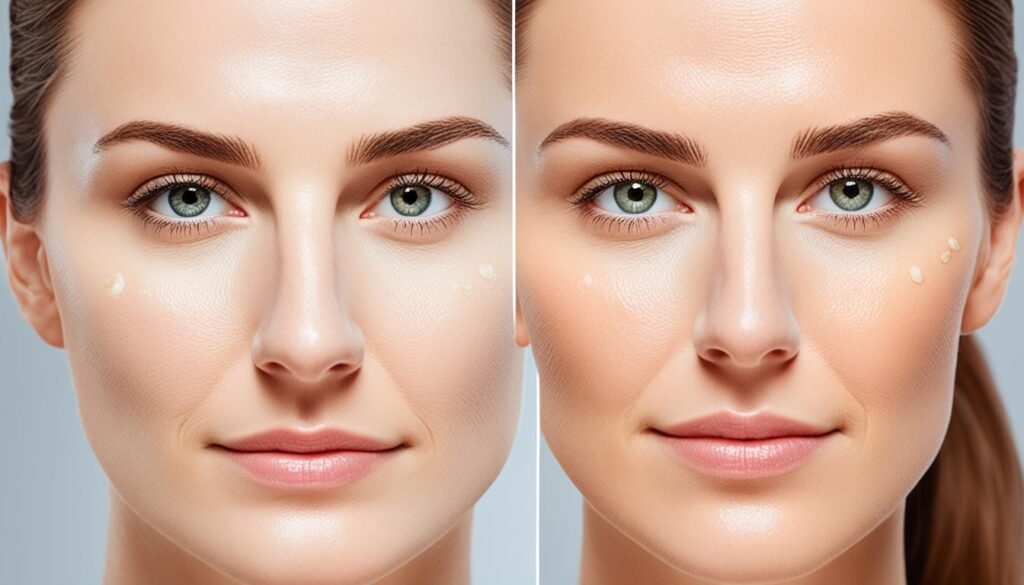
Yes, getting a face laser treatment can result in significant improvement in the skin’s appearance. Laser Genesis, for example, stimulates collagen production, which reduces the appearance of fine lines and wrinkles, resulting in smoother skin and a healthy glow.
The treatment is known for its ability to rejuvenate the complexion, leaving patients with visible and long-lasting results. The downtime is minimal, making it a convenient option for those looking to improve their skin’s overall quality.
Here is a summary table of the key benefits of getting a face laser treatment:
| Benefits of Face Laser Treatment |
|---|
| Stimulates collagen production |
| Reduces fine lines and wrinkles |
| Improves skin texture |
| Provides a healthy glow |
| Minimal downtime |
As shown in the table above, face laser treatments offer multiple benefits for the skin, such as collagen production stimulation, reduction of fine lines and wrinkles, improvement in skin texture, and the attainment of a healthy glow. Additionally, the downtime associated with these treatments is minimal, allowing for quicker recovery and minimal disruption to daily activities.
Does Face Laser Remove Acne Scars and Banish Broken Blood Vessels?
When it comes to addressing acne scars and broken blood vessels on the face, face laser treatments have shown significant effectiveness. Two specific types of lasers are commonly used for these concerns, namely the Fractional CO2 laser and pulsed dye lasers.
The Fractional CO2 laser works by removing damaged skin tissue and stimulating collagen growth. This promotes the reduction of deep acne scars, resulting in a smoother and more even skin texture. The laser’s precision enables it to target specific areas of scarring, providing targeted and long-lasting improvement.
Pulsed dye lasers, on the other hand, utilize targeted yellow light to gently heat and eliminate broken blood vessels on the face. This treatment effectively banishes the appearance of visible blood vessels, restoring a more even and uniform complexion.
Both the Fractional CO2 laser and pulsed dye lasers are considered among the most effective options for addressing acne scars and broken blood vessels. However, it’s important to note that individual results may vary depending on the severity of the condition and other factors.
Here is a comparison of the two treatments:
| Treatment | Benefits |
|---|---|
| Fractional CO2 Laser | Promotes collagen growth Reduces deep acne scars Smoother skin texture |
| Pulsed Dye Lasers | Targets broken blood vessels Improves overall complexion Restores even skin tone |
In summary, face laser treatments, specifically the Fractional CO2 laser and pulsed dye lasers, offer effective solutions for removing acne scars and eliminating broken blood vessels on the face. These treatments provide targeted and lasting results, helping individuals achieve smoother, clearer, and more even-toned skin.
Conclusion
Laser skin treatments offer a non-invasive and effective solution for skin brightening and addressing various pigmentation concerns. These treatments, when performed by qualified professionals, provide visible and long-lasting results. By targeting the skin’s outer layer or breaking down melanin, laser treatments can lighten blemishes, age spots, and overall sun damage, revealing a radiant, even-toned complexion.
While there are potential risks and complications associated with laser treatments, such as scarring or hyperpigmentation, these can be minimized by choosing a board-certified dermatologist experienced in performing laser resurfacing. It is also essential to follow aftercare instructions correctly to optimize healing and achieve desired outcomes.
If laser treatments are not suitable or preferred, alternatives such as chemical peels and microneedling can be considered. These treatments offer different approaches for skin brightening and can be tailored to individual needs and preferences.
Overall, laser skin treatments, combined with proper aftercare and maintenance, can significantly improve skin texture, tone, and overall appearance. To determine the best treatment options for your specific needs and goals, consult with a board-certified dermatologist who can provide expert guidance and ensure the highest level of care.
FAQ
What are laser skin treatments for skin brightening?
Laser skin treatments are procedures that use lasers to effectively brighten the skin and reveal a radiant, even-toned complexion. These treatments target the skin’s outer layer or break down its pigment-producing melanin to lighten blemishes or darker patches.
What types of lasers are used for skin lightening?
Laser & Skin Surgery Center of New York offers several types of lasers for skin lightening treatments, including Clear + Brilliant®, Clear + Brilliant Permea, Fraxel Dual®, LaseMD, nd:YAG, PicoSure™, PicoPlus™, and Ruby laser.
What are the pros and cons of using lasers to lighten your skin?
The pros of using lasers for skin lightening include non-invasiveness, visible results, continued collagen production, minimal downtime, customizable treatments, short procedure times, and long-lasting results. The cons may include potential risks and complications, such as scarring or hyperpigmentation if performed by an inexperienced provider and possible complications if aftercare instructions aren’t followed correctly.
What are the potential risks and complications of laser skin lightening?
Laser skin lightening treatments may have temporary side effects such as redness and swelling, bruising, crusting, and blistering. These effects typically resolve within 1-2 weeks. It is essential to choose a board-certified dermatologist experienced in performing laser resurfacing to minimize the risk of complications.
What should I expect during laser skin lightening?
During laser skin lightening treatments, patients are provided with goggles to protect their eyes from the laser. A handheld laser device passes over the skin areas with hyperpigmentation, causing a mild tingling or snapping sensation. To enhance comfort, a topical numbing cream may be applied before treatment, and a jet of cold air may be used to cool the treatment area. Each session usually lasts around 30 minutes, depending on the device used, skin type, and condition. Aftercare instructions will be provided to accelerate healing and optimize results.
What are the alternatives to laser skin lightening?
If laser skin lightening is not suitable or preferred, there are alternative treatment options to consider, such as chemical peels, microneedling, and topical products containing ingredients like retinoids and hydroquinone.
How do lasers lighten skin discoloration?
Lasers lighten skin discoloration by targeting melanin, the skin pigment, which absorbs light at various wavelengths. The laser emits a focused beam of light energy that heats and diminishes the specific targets known as chromophores in the skin.
Which types of lasers are used for skin lightening treatments?
Various types of lasers are used for skin lightening treatments, including fractional non-ablative lasers, low-fluence Q-switched Nd-YAG laser, intense pulsed light (IPL), and ablative lasers.
What are the best face laser treatments available?
Some of the best face laser treatments available include Laser Genesis, fractional CO2 laser, pulsed dye lasers, and Fraxel Laser.
Does your skin improve after getting a face laser treatment?
Yes, getting a face laser treatment can result in significant improvement in the skin’s appearance. Laser Genesis, for example, stimulates collagen production, reducing the appearance of fine lines and wrinkles, resulting in smoother skin and a healthy glow.
Does face laser remove acne scars and banish broken blood vessels?
Yes, face laser treatments show significant effectiveness in removing acne scars and banishing broken blood vessels. Fractional CO2 laser works by removing damaged skin tissue and promoting collagen growth, resulting in the reduction of deep acne scars. Pulsed dye lasers use targeted yellow light to gently heat and kill blood vessels, effectively treating broken blood vessels on the face.
What is the conclusion about laser skin treatments?
Laser skin treatments offer a non-invasive and effective solution for skin brightening and addressing various pigmentation concerns. While there are potential risks and complications associated with laser treatments, they provide visible and long-lasting results when performed by qualified professionals. Alternatives to laser treatments, such as chemical peels and microneedling, can be considered based on individual needs and preferences. Consultation with a board-certified dermatologist is essential to determine the best treatment options for individual needs and goals.