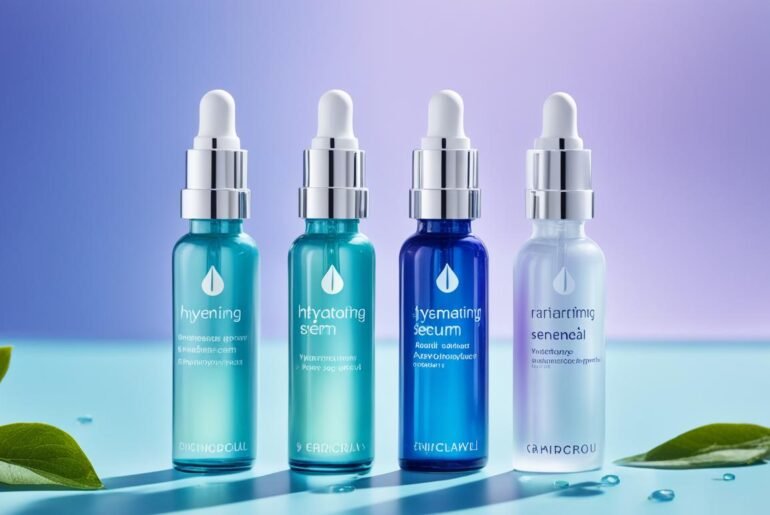
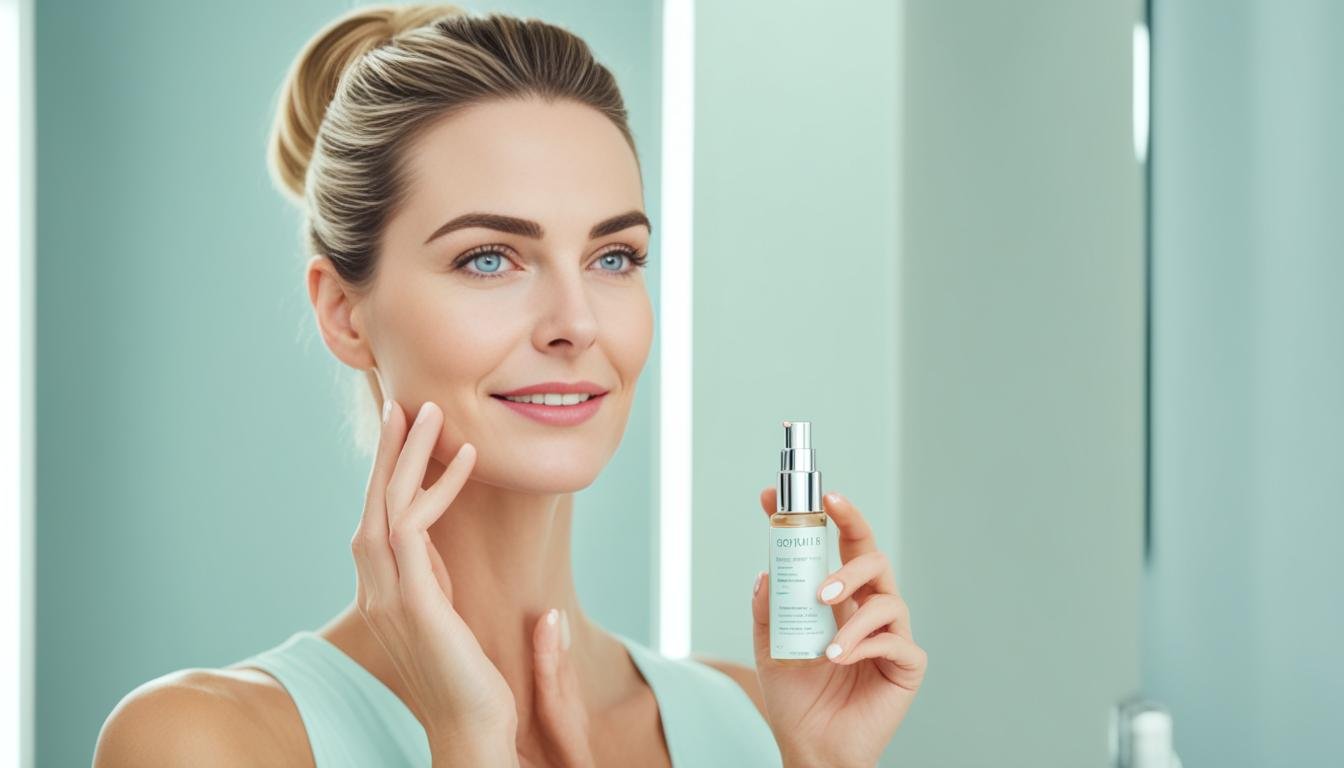
Did you know that facial serums are highly concentrated formulas that can contain up to 70% active ingredients? These powerful elixirs have the potential to transform your skincare routine and address specific skin concerns with precision and efficacy. However, to maximize their benefits, it is essential to know the correct way to apply hydrating facial serums. In this article, I will guide you step-by-step through the process of applying serums, ensuring that you unlock the full potential of these skincare superheroes and achieve a radiant and hydrated complexion.
Key Takeaways:
- Facial serums are highly concentrated formulas that can contain up to 70% active ingredients.
- Proper application of hydrating facial serums is crucial for maximizing their effectiveness.
- Applying serums after cleansing and toning, but before moisturizing, is the ideal timing in your skincare routine.
- Preparing your skin through cleansing and exfoliation helps enhance serum absorption.
- A step-by-step guide will teach you the correct technique for applying facial serums.
The Importance of Applying Serums Correctly
Serums are a crucial step in any skincare routine as they contain a high concentration of active ingredients that can target specific skin concerns. However, to achieve the desired results, it is important to apply serums correctly. Proper serum application not only ensures optimal absorption and effectiveness but also enhances the overall efficacy of your skincare routine.
When it comes to applying facial serums, a common mistake is using too much product. Remember, a little goes a long way. Applying a pea-sized amount of serum is generally sufficient to cover the entire face and neck. This helps prevent product wastage and ensures even distribution.
Another key aspect of correct serum application is the technique used. Gently massage the serum onto clean, dry skin using upward motions. This facilitates better absorption and allows the active ingredients to penetrate deeper into the skin.
One important point to note is the order in which you apply your skincare products. Serums should generally be applied after cleansing and toning but before moisturizing. This allows the active ingredients to directly target the skin and preps it for better absorption and effectiveness.
Additionally, it is essential to allow the serum to fully absorb into the skin before applying other products. This ensures that the active ingredients have enough time to work their magic without interference from other skincare products.
Properly applying facial serums can significantly enhance your skincare routine and help you achieve your desired skin goals.
By taking the time to apply serums correctly, you can optimize the benefits of these potent skincare products and nourish your skin from within.
Now that we understand the importance of proper serum application, let’s explore the ideal timing for serum application in your skincare routine. This will ensure that you make the most of these powerful skincare products and enjoy beautiful, healthy skin.
When to Apply Serum in Your Skincare Routine
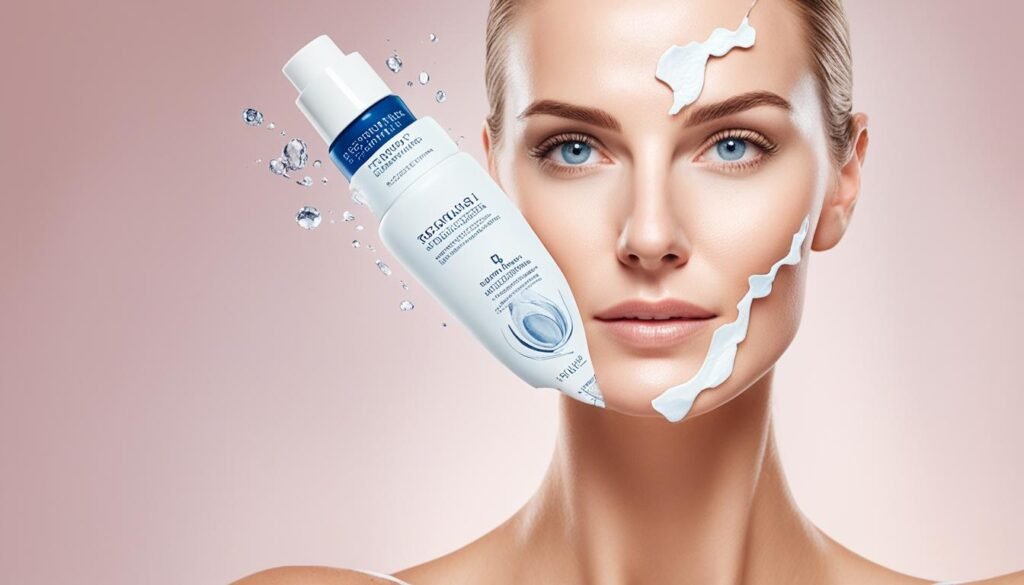
Timing is everything when it comes to incorporating facial serums into your skincare routine. To maximize the benefits of these powerful formulations, it is essential to apply them at the right time. Ideally, you should use serums after cleansing and toning, but before moisturizing.
Why is the timing crucial? Applying facial serums after cleansing ensures that your skin is free from impurities, allowing the active ingredients in the serum to penetrate deeply into the skin. Toning helps to balance the pH level of your skin, creating an optimal environment for the serum to work effectively. By applying serums before moisturizing, you allow the concentrated formula to absorb into the skin without any barrier, ensuring maximum absorption and efficacy.
By following this order in your skincare routine, you also prevent dilution of the serum’s active ingredients. Moisturizers, although important for hydration, contain different formulations that may interfere with the absorption of the serum. Therefore, it is essential to apply serums first to allow them to work their magic.
Remember, consistency is key when it comes to skincare. Incorporating the regular application of serums into your beauty routine will help you achieve optimal results in the long run.
Ideal Order of Skincare Routine Steps
| Step | Product |
|---|---|
| 1 | Cleanse |
| 2 | Tone |
| 3 | Apply Serum |
| 4 | Moisturize |
How to Prepare Your Skin for Serum
Properly preparing your skin before applying serum is essential for maximizing its absorption and effectiveness. By following these steps, you can ensure that your skincare routine is optimized for the best results.
Step 1: Cleanse Your Skin
Start by washing your face with a gentle cleanser to remove any dirt, oil, or makeup residue. This will create a clean canvas for the serum to penetrate deep into your skin.
Step 2: Exfoliate Regularly
Exfoliation is an important step in your skincare routine as it helps to remove dead skin cells and unclog pores. By exfoliating regularly, you can promote better absorption of the serum into your skin.
Tip: Choose a gentle exfoliator that suits your skin type to avoid irritation or over-exfoliation.
Step 3: Tone Your Skin
After cleansing and exfoliating, it’s important to restore your skin’s pH balance and prepare it for the serum. Apply a toner using a cotton pad to ensure that your skin is ready to receive the benefits of the serum.
Step 4: Pat Your Skin Dry
Gently pat your skin dry with a clean towel. Avoid rubbing your face, as this can cause irritation and disrupt the delicate balance of your skin.
Step 5: Apply the Serum
Now that your skin is properly prepared, it’s time to apply the serum. Take a small amount of the serum and gently massage it into your skin using upward strokes. Be sure to cover your entire face and neck.
Step 6: Allow the Serum to Absorb
Give the serum some time to fully absorb into your skin before applying any other skincare products. This will allow the active ingredients to penetrate and work their magic.
Step 7: Follow with Moisturizer
After the serum has absorbed, follow it up with a moisturizer to lock in the hydration and seal in the benefits of the serum. Choose a moisturizer that complements your skin type for optimal results.
By following these steps to prepare your skin for serum application, you can enhance the absorption and effectiveness of the product, ensuring that you get the most out of your skincare routine.
The Correct Way to Apply Serum
Properly applying facial serums is crucial for maximizing their effectiveness and ensuring that the active ingredients penetrate the skin. By following a few simple steps, you can optimize the benefits of your skincare routine and achieve a radiant complexion. Here’s a step-by-step guide on how to apply facial serums:
- Cleanse and tone your skin: Before applying any serums, make sure your skin is clean and free of dirt and impurities. Use a gentle cleanser and follow up with a toner to prepare your skin for serum application. This will help the serums penetrate more effectively.
- Dispense the right amount: Start by dispensing a small amount of serum onto your fingertips. Remember, a little goes a long way, so start with a pea-sized amount and adjust as needed.
- Warm the serum: Rub the serum between your fingertips to warm it up. This will help the serum spread more easily and allow for better absorption into the skin.
- Apply in gentle upward motions: Using your fingertips, gently press the serum onto your face in upward motions. Start from the center of your face and work your way outwards. Pay extra attention to areas that need extra hydration or targeted treatment.
- Pat and press: After applying the serum, use your palms to gently pat and press the product into your skin. This technique helps the serum penetrate deeper and promotes better absorption.
- Allow the serum to absorb: Give the serum some time to absorb into your skin before applying any other products. This allows the active ingredients to work their magic and ensures optimal results.
- Follow up with moisturizer: Once the serum has absorbed, seal in the hydration by applying a moisturizer. This will help lock in the benefits of the serum and provide additional nourishment to your skin.
Remember, consistency is key when it comes to incorporating facial serums into your beauty routine. Make it a habit to apply serums morning and night for the best results. With the correct application technique, you can enjoy the full benefits of these powerful skincare products and achieve a glowing complexion.
Tips for Choosing the Right Serum for Your Skin Type
Choosing the right serum for your skin type is crucial for achieving the desired results in your skincare routine. With so many options available, it can be overwhelming to find the perfect hydrating serum that addresses your specific needs. Here are some tips and recommendations to guide you in selecting the best hydrating serum based on different skin types, including oily, dry, sensitive, and mature skin.
Oily Skin
For oily skin, look for hydrating serums that are lightweight and oil-free. These serums should provide hydration without adding excess oil to the skin. Ingredients like hyaluronic acid and niacinamide can help to balance oil production and reduce the appearance of enlarged pores.
Dry Skin
If you have dry skin, opt for hydrating serums that are rich in emollients and humectants. Look for ingredients such as glycerin, ceramides, and natural oils like jojoba or argan oil. These ingredients help to lock in moisture and restore the skin’s natural barrier, leaving it hydrated and supple.
Sensitive Skin
For sensitive skin, it’s important to choose hydrating serums that are formulated with gentle ingredients to minimize the risk of irritation. Look for serums that are fragrance-free and have soothing ingredients like chamomile, aloe vera, or green tea. These ingredients can help calm and hydrate sensitive skin without causing any adverse reactions.
Mature Skin
As we age, our skin loses moisture and elasticity. To combat these signs of aging, opt for hydrating serums that are specifically designed for mature skin. Look for serums that contain ingredients like peptides, retinol, or vitamin C. These ingredients can help boost collagen production, reduce the appearance of fine lines and wrinkles, and promote a more youthful-looking complexion.
Remember, it’s important to patch test any new skincare product before incorporating it fully into your routine. Additionally, consult with a dermatologist or skincare professional if you have any specific skin concerns or conditions.
By choosing the right hydrating serum for your skin type, you can enhance the effectiveness of your skincare routine and achieve the healthy, hydrated complexion you desire. Experiment with different serums and adjust your routine as needed to find the perfect match for your skin.
Below is a table summarizing the key points to consider when choosing a hydrating serum for different skin types:
| Skin Type | Recommended Ingredients | Key Benefits |
|---|---|---|
| Oily Skin | Hyaluronic Acid, Niacinamide | Controls oil production, reduces pore size |
| Dry Skin | Glycerin, Ceramides, Natural Oils | Locks in moisture, restores skin barrier |
| Sensitive Skin | Chamomile, Aloe Vera, Green Tea | Soothes and hydrates without irritation |
| Mature Skin | Peptides, Retinol, Vitamin C | Increase collagen production, reduce signs of aging |
Remember to always consult with a skincare professional or dermatologist for personalized recommendations based on your specific skin concerns and needs.
Common Serum Application Mistakes to Avoid

Applying facial serums is an essential step in any skincare routine. However, even a seemingly simple task can be prone to common mistakes that can hinder the effectiveness of these potent products. To ensure that you make the most of your skincare regimen, it’s important to be aware of these common serum application mistakes and avoid them.
Using Too Much Product
One of the most common mistakes people make when applying facial serums is using too much product. Remember, a little goes a long way with serums. Applying an excessive amount can lead to product buildup, making it difficult for your skin to absorb the active ingredients properly. Instead, use a small amount and gently pat it into your skin, allowing it to absorb fully.
Not Allowing Enough Time for Absorption
Another mistake to avoid is not giving your serum enough time to absorb before moving on to the next step of your skincare routine. Serums are designed to penetrate deep into the skin and deliver their beneficial ingredients. To ensure optimal results, allow your serum to fully absorb for a few minutes before applying moisturizer or sunscreen.
Not Following the Recommended Order of Application
The order in which you apply your skincare products can significantly impact their effectiveness. Many people make the mistake of applying their serum after moisturizer, which can create a barrier and prevent the serum from properly penetrating the skin. To maximize the benefits of your serum, always apply it after cleansing and toning, but before moisturizing.
By avoiding these common serum application mistakes, you can ensure that you are getting the most out of your skincare routine and enjoying the full benefits of your facial serums. Now that you’re aware of these pitfalls, it’s time to perfect your application technique and achieve glowing, healthy skin.
Additional Skincare Tips for Optimal Results
While applying hydrating serums correctly is crucial for a well-rounded skincare routine, there are other tips and recommendations that can further enhance your results. Incorporate these additional steps and products into your beauty routine to achieve a healthy and glowing complexion.
1. Use a Daily Moisturizer
Moisturizers are essential for maintaining skin hydration and protecting it from environmental stressors. After applying your hydrating serum, follow up with a moisturizer suitable for your skin type. Look for ingredients like hyaluronic acid and ceramides that lock in moisture and create a protective barrier.
2. Don’t Forget the SPF
Protecting your skin from the damaging effects of the sun is crucial for maintaining its health and youthful appearance. Incorporate a broad-spectrum sunscreen with at least SPF 30 into your daily skincare routine, applying it as the final step after your moisturizer. This will shield your skin from harmful UV rays and prevent premature aging.
3. Incorporate a Toner
Toners are often overlooked but can be beneficial for balancing the skin’s pH levels, removing any remaining impurities, and prepping the skin for better serum absorption. Look for toners with gentle ingredients like rose water or witch hazel and apply them after cleansing, but before your hydrating serum.
4. Consider Eye Cream
The delicate skin around the eyes requires special attention. To target fine lines, puffiness, and dark circles, incorporate an eye cream into your skincare routine. Gently tap the cream around the eye area, avoiding direct contact with the eyes themselves.
5. Exfoliate Weekly
Exfoliation helps remove dead skin cells and promote cell turnover, revealing smoother and brighter skin. Incorporate an exfoliating product into your routine once or twice a week, depending on your skin’s sensitivity. Be gentle and avoid over-exfoliating, as it can cause irritation.
“In addition to applying hydrating serums, it’s important to take a holistic approach to skincare. By incorporating these additional steps and products, you can optimize your routine and achieve the best possible results.”
6. Stay Hydrated and Get Adequate Sleep
Skincare isn’t just about applying products; it also involves taking care of your overall well-being. Hydrate your body by drinking enough water throughout the day, as hydration from the inside reflects on your skin. Additionally, prioritize getting enough restful sleep, as it allows your skin to regenerate and repair itself.
| Additional Skincare Tips for Optimal Results |
|---|
| 1. Use a Daily Moisturizer |
| 2. Don’t Forget the SPF |
| 3. Incorporate a Toner |
| 4. Consider Eye Cream |
| 5. Exfoliate Weekly |
| 6. Stay Hydrated and Get Adequate Sleep |
Incorporating these additional skincare tips into your routine will complement the benefits of using hydrating serums. Remember, consistency is key when it comes to skincare, so stick to your routine and enjoy the radiant results.
The Benefits of Hydrating Facial Serums
Hydrating serums are an essential addition to any skincare routine, offering a multitude of benefits for the skin. By incorporating hydrating serums into your beauty regimen, you can enhance the overall health and appearance of your skin. Let’s explore the specific advantages of using hydrating serums and why they should be a staple in your skincare routine.
Improved Hydration
Increasing the hydration levels of your skin is crucial for maintaining its health and vitality. Hydrating serums are designed to deliver intense moisture to the deeper layers of the skin, resulting in plumper, more supple skin. The lightweight texture of these serums allows for deep penetration, ensuring long-lasting hydration throughout the day.
Increased Collagen Production
Collagen is an essential protein responsible for providing strength and elasticity to the skin. As we age, collagen production decreases, leading to the formation of fine lines and wrinkles. Hydrating serums often contain ingredients like hyaluronic acid and peptides that promote collagen synthesis, helping to restore firmness and elasticity to the skin.
A More Youthful Appearance
The powerful combination of hydration and increased collagen production offered by hydrating serums can result in a more youthful complexion. Regular use of these serums can help minimize the appearance of fine lines, wrinkles, and skin sagging, promoting a smoother and more radiant appearance.
Enhanced Skincare Routine
Hydrating serums act as a potent booster to your existing skincare routine. They can be used alongside other skincare products, such as cleansers, toners, and moisturizers, to provide an extra layer of hydration and nourishment to the skin. By incorporating hydrating serums, you can supercharge your skincare routine and achieve optimal results.
Comparison of Hydrating Serums
| Product Name | Key Ingredients | Price | |
|---|---|---|---|
| Brand A Hydrating Serum | Hyaluronic Acid, Vitamin C, Peptides | $XX.XX | |
| Brand B Hydrating Serum | Glycerin, Aloe Vera, Ceramides | $XX.XX | |
| Brand C Hydrating Serum | Lactic Acid, Niacinamide, Green Tea Extract | $XX.XX |
Table: Comparison of hydrating serums with their key ingredients and price.
As seen in the table above, different hydrating serums offer a variety of key ingredients and price ranges. It’s essential to choose a serum that aligns with your specific skin concerns and budget to maximize the benefits.
In conclusion, incorporating hydrating serums into your skincare routine can have significant positive effects on your skin. From improved hydration and increased collagen production to a more youthful appearance, the benefits are undeniable. Explore the wide range of hydrating serums available and find the perfect one to enhance your beauty routine and achieve your desired skin goals.
How to Incorporate Serums into Your Beauty Routine

Incorporating serums into your beauty routine is a simple and effective way to enhance your skincare regimen. By understanding the proper application techniques, you can seamlessly integrate hydrating facial serums into your daily or nightly routine. Here are some practical tips and suggestions to help you get started:
- Choose the right serum: Select a serum that addresses your specific skin concerns, such as hydration, brightening, or anti-aging. Look for high-quality brands that are formulated with potent active ingredients.
- Cleanse and tone your skin: Before applying the serum, make sure to cleanse your face thoroughly to remove any dirt or impurities. Follow it up with a toner to balance your skin’s pH levels.
- Prep your skin: Gently exfoliate your skin once or twice a week to remove dead skin cells and allow the serum to penetrate more effectively. Follow with a hydrating face mask for added nourishment.
- Apply the serum: Take a small amount of serum and warm it between your palms. Gently press it onto your face and neck using upward motions. Avoid rubbing or pulling on the skin, as this can cause irritation.
- Allow absorption: Give the serum a few minutes to absorb into your skin before proceeding with the rest of your skincare routine. This will ensure that the active ingredients can work their magic.
- Follow with moisturizer: After the serum has fully absorbed, apply a moisturizer to lock in the hydration and further nourish your skin. Choose a moisturizer that complements the serum and suits your skin type.
- Don’t forget SPF: In the morning, always finish off your skincare routine with a broad-spectrum sunscreen. This will protect your skin from harmful UV rays and prevent premature aging.
By following these steps, you can easily incorporate serums into your beauty routine and reap the benefits of their hydrating and rejuvenating properties.
Testimonial:
“Since I started integrating facial serums into my beauty routine, I’ve noticed a significant improvement in the overall health and appearance of my skin. The serums have boosted hydration and provided a radiant glow that I never thought was possible. I highly recommend giving them a try!” – Emily, skincare enthusiast.
| Serum Type | Benefits |
|---|---|
| Hydrating Serum |
|
| Brightening Serum |
|
| Anti-Aging Serum |
|
Conclusion
Applying hydrating facial serums correctly is crucial for achieving optimal results and unlocking the full benefits of these potent skincare products. By incorporating these serums into your skincare routine, you can achieve a dewy and radiant complexion.
During the application process, make sure to follow the step-by-step guide provided in this article. Cleanse and exfoliate your skin before applying the serums to enhance absorption. Apply the serum in a gentle, upward motion, focusing on the areas of concern. Allow the serum to fully absorb into your skin before moving on to the next step in your routine.
Furthermore, it’s important to choose the right serum for your particular skin type. Whether you have oily, dry, sensitive, or mature skin, there is a hydrating serum out there for you. Consider your skin’s needs and concerns when selecting a serum, and remember to read product labels and reviews to ensure its potential effectiveness.
By following these valuable tips and incorporating hydrating serums into your beauty routine, you can elevate your skincare game and enjoy the numerous benefits these products have to offer. From increased hydration to improved collagen production, the right facial serum can help you achieve the skin of your dreams.
FAQ
What are facial serums?
Facial serums are highly concentrated formulas that target specific skin concerns. They contain a high concentration of active ingredients that can penetrate the skin more deeply than other skincare products.
When should I apply serum in my skincare routine?
Serums should typically be applied after cleansing and toning, but before moisturizing. This allows the active ingredients in the serum to penetrate the skin more effectively.
What should I do to prepare my skin before applying serum?
It is important to wash and exfoliate your skin before applying serums. This helps remove any dirt, oil, and dead skin cells, allowing the serum to better penetrate and absorb into the skin.
How do I apply facial serums correctly?
To apply facial serums correctly, start by using a small amount of product and gently massage it into clean, dry skin. Allow the serum to absorb fully before applying other skincare products or makeup.
How do I choose the right serum for my skin type?
To choose the right serum for your skin type, consider your specific skincare concerns and look for serums that target those concerns. For oily skin, opt for lightweight, oil-free serums, while dry skin may benefit from thicker, more hydrating serums.
What are common serum application mistakes to avoid?
Common serum application mistakes to avoid include using too much product, not allowing enough time for absorption, and not following the recommended order of application in your skincare routine.
Are there any additional skincare tips for optimal results?
Yes, in addition to applying hydrating serums correctly, it is important to moisturize, use toners, and incorporate other complementary products into your skincare routine to enhance the overall results.
What are the benefits of using hydrating facial serums?
Hydrating facial serums offer benefits such as improved hydration, increased collagen production, and a more youthful appearance. They can also help address specific skin concerns, such as fine lines, wrinkles, and dullness.
How can I seamlessly incorporate serums into my beauty routine?
To seamlessly incorporate serums into your beauty routine, apply them after cleansing and toning and before moisturizing. This simple step can make a significant difference in the overall effectiveness of your skincare products.
How can I optimize the benefits of hydrating facial serums?
To optimize the benefits of hydrating facial serums, follow a consistent skincare routine, choose the right products for your skin type, and use serums in combination with other skincare products that complement their effectiveness.