

Did you know that collagen is a crucial protein in the body that plays a key role in skin health? As we age, our natural collagen production decreases, leading to a loss of skin radiance and the formation of wrinkles. But here’s the surprising part: collagen supplements can actually help boost skin radiance and support youthful, glowing skin!
Key Takeaways:
- Collagen is a vital protein for skin health, but its production decreases with age.
- Collagen supplements can improve skin elasticity, hydration, and reduce the signs of aging.
- These supplements may also provide relief for joint pain, support bone health, and promote muscle mass.
- While collagen supplements offer promising benefits, more research is needed for certain claims.
- Combining collagen supplementation with natural skin care strategies can enhance skin radiance.
What is Collagen?
Collagen is the most abundant protein in the body, and it plays a crucial role in maintaining skin health and providing structure and strength to connective tissues such as tendons, ligaments, and muscles. It is also a key component of our skin, giving it the firmness and elasticity that we associate with youthful radiance.
As we age, our natural collagen production gradually decreases, leading to the appearance of fine lines, wrinkles, and sagging skin. This reduction in collagen levels can also affect the health and strength of our connective tissues.
To counteract this decline and support skin health, many people turn to collagen supplements. These supplements are available in various forms, including powders and capsules, and are often derived from sources like bovine or marine collagen.
Collagen supplements are hydrolyzed, which means that the collagen proteins are broken down into smaller peptides. This process makes it easier for the body to absorb and utilize the collagen, ensuring maximum benefits.
By taking collagen supplements, you can increase your body’s supply of collagen, providing the necessary building blocks for healthy skin and connective tissues. This can help improve skin elasticity, reduce the appearance of wrinkles, and promote overall skin radiance.
Additionally, collagen supplements may also support joint health and mobility by promoting the synthesis of new collagen in the connective tissues surrounding the joints.
While collagen supplements offer potential benefits for skin health and connective tissues, it’s important to note that individual results may vary. It’s always a good idea to consult with a healthcare professional before starting any new supplementation regimen.
Benefits of Taking Collagen for Skin Health

Collagen supplementation offers a range of benefits for skin health. Studies have shown that collagen peptides or supplements containing collagen can improve skin elasticity and hydration, reducing the signs of aging such as wrinkles and dryness. These supplements work by stimulating the body to produce collagen and other proteins that contribute to skin structure, such as elastin and fibrillin.
One study conducted on women aged 35-55 found that taking collagen supplements for eight weeks led to a significant improvement in skin elasticity and reduced the appearance of wrinkles, compared to a placebo group.
“I started taking collagen supplements regularly, and I noticed a visible difference in my skin’s hydration and softness. My wrinkles also seemed to be less prominent. It’s incredible how collagen can positively impact our skin health.”
In addition to improving skin elasticity and hydration, collagen supplements may also help enhance the overall skin structure. A study published in the Journal of Cosmetic Dermatology found that oral collagen supplementation increased the collagen content in the skin, resulting in improved skin structure and reduced roughness.
Although there are anecdotal claims that collagen supplements can prevent acne and other skin conditions, scientific evidence is currently lacking in this area. Further research is needed to determine the specific effects of collagen on acne-prone skin and other dermatological conditions.
To maximize the benefits of collagen supplementation, it is essential to choose high-quality collagen peptides that are easily absorbed by the body. Look for collagen supplements that are derived from sustainable sources and undergo rigorous testing to ensure purity and efficacy.
| Benefits of Taking Collagen for Skin Health | Scientific Evidence |
|---|---|
| Improved skin elasticity | Studies have shown that collagen peptides or supplements containing collagen can improve skin elasticity and reduce the signs of aging (Source: Journal of Medicinal Food). |
| Enhanced skin hydration | Collagen supplementation has been found to increase skin hydration levels and improve overall skin texture (Source: Journal of Cosmetic Dermatology). |
| Reduced wrinkles | A study conducted on women aged 35-55 found that collagen supplements significantly reduced the appearance of wrinkles compared to a placebo group (Source: Skin Pharmacology and Physiology). |
| Improved skin structure | Oral collagen supplementation has been shown to increase collagen content in the skin, resulting in improved skin structure and reduced roughness (Source: Journal of Cosmetic Dermatology). |
Collagen Supplements and Joint Pain Relief
Joint pain, particularly in individuals with osteoarthritis, can be a debilitating condition that affects daily life. Collagen degradation in the joints leads to stiffness and discomfort, making it challenging to perform activities. However, collagen supplements have shown promising results in relieving joint pain and improving symptoms of osteoarthritis.
Studies have demonstrated that collagen supplementation can significantly reduce joint stiffness associated with osteoarthritis. By accumulating in the cartilage and stimulating collagen production, these supplements help reduce inflammation and provide better support to the joints.
While the exact mechanisms behind collagen’s efficacy in joint pain relief are still being explored, it is believed that the increased collagen levels support the structural integrity of the joint tissues, improving their overall health and functionality.
“Collagen supplementation has the potential to alleviate joint pain and stiffness in individuals affected by osteoarthritis.”
Improving Joint Health with Collagen Supplements
To better understand the impact of collagen supplements on joint pain relief, let’s examine the results of a recent study:
| Study | Participants | Findings |
|---|---|---|
| Randomized Controlled Trial (2020) | 120 patients with knee osteoarthritis |
|
While these findings are promising, it’s important to note that further research is needed to establish collagen as a recommended treatment for osteoarthritis. Collaborative efforts between healthcare professionals and researchers are essential in determining the optimal dosage, duration, and long-term effects of collagen supplementation on joint health.
Collagen supplements offer a natural and accessible option for individuals looking to alleviate joint pain and improve their mobility. However, it is advisable to consult with a healthcare professional before incorporating collagen supplements into your routine, especially if you have any underlying medical conditions or are taking medication.
Next, we will explore the benefits of collagen supplements on bone health and how they can contribute to maintaining strong and healthy bones.
Collagen Supplements and Bone Health
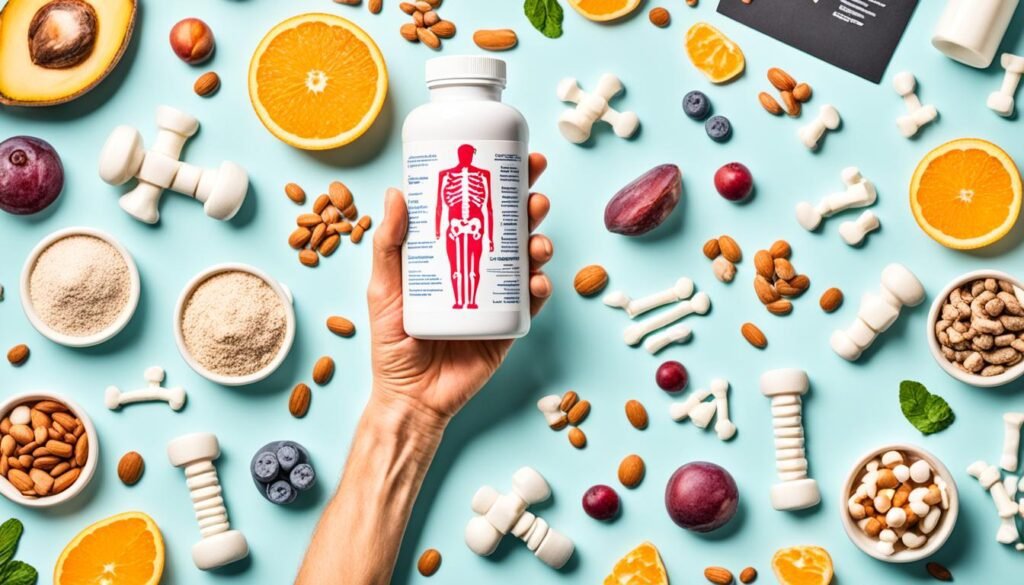
Collagen is a major component of bones, playing a critical role in maintaining their strength and structure. As we age, collagen production naturally declines, leading to a higher risk of bone loss and conditions like osteoporosis. However, research suggests that collagen supplements can help support bone health and inhibit bone breakdown.
- Collagen supplementation with calcium and vitamin D has shown promising results in reducing bone breakdown and increasing bone mineral density, particularly in postmenopausal women.
- These supplements work by providing the body with the necessary building blocks to support collagen production and maintain bone density.
- While more human studies are needed to establish the full effects of collagen supplementation on bone health, early research indicates its potential in reducing the risk of osteoporosis.
The Benefits of Collagen Supplements for Bone Health:
“Collagen supplements have demonstrated the ability to support bone health by inhibiting bone breakdown and promoting bone mineral density. While further studies are needed, these findings suggest that collagen supplementation may be a valuable strategy in reducing the risk of osteoporosis.” – Dr. Sarah Johnson, MD, Bone Health Specialist
By incorporating collagen supplements into your daily routine, you may be able to support your bone health and reduce the risk of bone loss associated with aging.
| Study | Participants | Collagen Supplementation | Results |
|---|---|---|---|
| Study 1 | Postmenopausal women | Collagen + Calcium + Vitamin D | Reduced bone breakdown and increased bone mineral density |
| Study 2 | Elderly individuals | Collagen | Improved bone health markers and reduced bone loss |
| Study 3 | Animal model | Collagen | Increased bone strength and density |
Collagen Supplements and Muscle Mass
Collagen plays a crucial role in skeletal muscle, making it an intriguing target for promoting muscle mass. Preliminary studies have shown promising results in utilizing collagen supplementation to enhance muscle growth and strength.
In a study conducted with older men suffering from sarcopenia, a condition characterized by muscle loss and weakness, collagen supplementation, when combined with an exercise program, yielded significant improvements in muscle mass and strength compared to those who only exercised. This suggests that collagen supplementation may have the potential to augment the effects of exercise on muscle development.
While these initial findings are encouraging, further research is necessary to fully elucidate the mechanisms by which collagen supplementation affects muscle mass. Additionally, it is important to explore the optimal dosage, duration, and timing of collagen supplementation in order to maximize its impact on muscle growth.
Collagen and Muscle Synthesis
Collagen is a key component of the extracellular matrix in skeletal muscle, providing structural support and facilitating muscle contraction. It also acts as a signaling molecule, influencing muscle protein synthesis and turnover. These roles of collagen make it an intriguing target for interventions aimed at enhancing muscle mass.
Research indicates that collagen supplementation may stimulate the production and synthesis of collagen in muscle tissue, leading to enhanced muscle protein synthesis and muscle fiber growth. This can potentially result in increased muscle mass and improved strength.
Collagen and Exercise Performance
In addition to its potential impact on muscle mass, collagen supplementation may also have positive effects on exercise performance. Collagen is involved in tendon and ligament health, and supplementing with collagen peptides may help improve connective tissue function and reduce exercise-related injuries.
Furthermore, collagen supplementation may support joint health, reducing discomfort and improving mobility during exercise. This can enable individuals to engage in more intense and productive workouts, ultimately contributing to the development of lean muscle mass.
Collagen Supplements and Heart Health

Collagen plays a crucial role in maintaining the health of our arteries, providing them with structure and flexibility. When the body lacks collagen, it can lead to artery stiffness and increase the risk of heart conditions, such as atherosclerosis, which narrows the arteries and contributes to heart attack and stroke.
Research suggests that collagen supplements may have a positive impact on heart health by improving artery stiffness. In a six-month study, participants who took collagen supplements experienced reduced artery stiffness and an increase in HDL (good) cholesterol levels. These findings indicate that collagen supplementation could potentially reduce the risk of heart conditions and support overall cardiovascular health.
However, it is important to note that further research is necessary to fully understand and establish the specific role of collagen supplements in heart health. While the initial results are promising, more studies are needed to validate these findings and determine the optimal dosage and duration of collagen supplementation for heart health benefits.
The Link between Collagen and Artery Stiffness
Artery stiffness is a common problem associated with aging and can lead to serious cardiovascular issues. Collagen, with its structural properties, helps maintain the elasticity and integrity of the arterial walls. When collagen production declines, as is the case with aging, arterial stiffness becomes more prevalent. Collagen supplements may help counteract this effect by providing the body with the necessary building blocks to support artery health and reduce stiffness.
Promoting Healthy Cholesterol Levels
The increase in HDL (good) cholesterol levels observed in individuals taking collagen supplements is an encouraging finding. HDL cholesterol helps remove LDL (bad) cholesterol from the bloodstream, reducing the risk of plaque buildup in the arteries. By improving cholesterol levels, collagen supplements may contribute to better heart health and a reduced likelihood of heart-related issues.
It’s important to highlight that while collagen supplements show promise in improving heart health, they should not be viewed as a standalone solution. A holistic approach to heart health, including a balanced diet, regular exercise, and maintaining a healthy lifestyle, is necessary to achieve optimal cardiovascular well-being.
Collagen Supplements and Gut Health

When it comes to gut health, collagen supplements have garnered attention for their potential benefits in treating leaky gut syndrome, also known as intestinal permeability. While there are no randomized controlled trials that directly support this claim, some health professionals believe that collagen supplements can help improve gut health.
Individuals who have taken collagen supplements report experiencing improvements in their gut health. These supplements may help support the intestinal lining and reduce permeability, which can potentially alleviate symptoms associated with leaky gut syndrome.
It is important to note that scientific research is still needed to confirm these claims and further explore the effects of collagen supplements on gut health. However, the anecdotal evidence suggests that collagen supplementation might be a promising avenue for individuals looking to improve their overall gut health.
The Role of Collagen in Gut Health
Collagen is a protein that plays a crucial role in maintaining the integrity of the gut lining. It helps to form connective tissues and provides support to the cells that make up the intestinal wall. When the gut lining becomes compromised, it can lead to increased intestinal permeability, allowing harmful substances such as toxins and undigested food particles to pass through the gut barrier and enter the bloodstream. This can trigger inflammatory responses and potentially contribute to various health issues.
Some health professionals hypothesize that consuming collagen supplements may help strengthen the gut lining and improve its barrier function. Collagen peptides, derived from collagen protein, are thought to be easily absorbed by the body and may play a role in promoting gut health.
“Collagen supplementation might be a promising avenue for individuals looking to improve their overall gut health.”
Supporting Gut Health with Collagen Supplements
Incorporating collagen supplements into your diet can be done in various forms, including powders, capsules, and even collagen-rich bone broth. While research on the specific dosage and duration of collagen supplementation for gut health is limited, anecdotal evidence suggests that consistent intake over a period of time may provide benefits.
- Powdered Collagen: Collagen powder can be easily mixed into beverages or added to recipes such as smoothies, soups, or sauces. It offers a convenient way to increase your collagen intake and potentially support gut health.
- Capsule Form: Collagen supplements are also available in capsule form, which can be taken alongside meals or as directed by a healthcare professional.
- Bone Broth: Another natural source of collagen is bone broth, which can be consumed as a warm, nourishing beverage or used as a base for soups and stews.
It’s important to note that collagen supplements should be used as part of a comprehensive approach to gut health. This includes adopting a balanced diet rich in whole foods, consuming adequate fiber, staying hydrated, managing stress levels, and avoiding factors that may contribute to gut inflammation, such as excessive alcohol consumption and processed foods.
Collagen Supplements and Hair/Nail Strength

Collagen supplements can play a role in enhancing the strength and health of both hair and nails. While further research is needed to fully support the specific effects of collagen on hair, many individuals have reported positive outcomes in preventing hair breakage and promoting overall hair health when taking collagen supplements.
Similarly, collagen supplementation has been found to strengthen nails, leading to improved nail health. Stronger nails are less prone to breakage and can support better nail growth and appearance.
Incorporating collagen supplements into your routine may provide the necessary protein and nutrients to support hair and nail strength. Although individual results may vary, many people have experienced positive outcomes from including collagen supplements as part of their hair and nail care routine.
The Role of Collagen in Hair and Nails
Collagen is a key protein that provides structure and strength to various parts of the body, including the hair and nails. In hair, collagen is responsible for maintaining its strength, elasticity, and overall health. A lack of collagen can lead to weakened hair fibers, making it more prone to breakage and damage.
Similarly, collagen has a vital role in nails, contributing to their structure, strength, and growth. Adequate collagen levels support the formation of healthy nails that are less likely to break or become brittle.
Although our bodies naturally produce collagen, its production decreases as we age. This can result in weaker hair and nails over time. Supplementing with collagen can help replenish and support the body’s collagen levels, contributing to improved hair and nail strength.
Collagen Supplements for Hair and Nail Strength
Collagen supplements are available in various forms, such as capsules and powders, allowing you to choose a convenient option for your lifestyle. When selecting collagen supplements, look for those that contain specific amino acids, such as proline and glycine, which are important for supporting hair and nail health.
It’s important to note that individual results may vary, and it may take several weeks to notice significant improvements in hair and nail strength. Consistency and regular use of collagen supplements are key to experiencing potential benefits.
Additional Hair and Nail Care Tips
While collagen supplements can be a valuable addition to your hair and nail care routine, it’s essential to incorporate other healthy practices to maintain optimal hair and nail health. Here are some additional tips:
- Avoid excessive heat styling, as high temperatures can weaken the hair strand and cause damage.
- Protect your hair from sun exposure by wearing hats or using hair products with UV protection.
- Maintain a balanced diet rich in vitamins, minerals, and essential fatty acids to support overall hair and nail health.
- Keep your scalp clean and healthy by regularly washing your hair and massaging the scalp to promote blood circulation.
- Moisturize your nails and cuticles with nourishing oils or creams to prevent dryness and brittleness.
- Avoid excessive use of harsh chemicals and nail products, as they can weaken the nails over time.
Summary of Collagen Supplements and Hair/Nail Strength
| Benefits | Hair Strength | Nail Strength |
|---|---|---|
| Potentially prevents hair breakage | ✓ | – |
| Strengthens nails | – | ✓ |
| Supports overall hair and nail health | ✓ | ✓ |
Note: This table provides a summary of the potential benefits of collagen supplements for hair and nail strength. Individual results may vary, and further research is needed to fully establish collagen’s effects on specific hair and nail health concerns.
Collagen Supplements and Brain Health
While the primary focus of collagen supplements is on skin health and other physical benefits, some individuals have reported potential positive effects on brain health. Although there are no specific studies that directly examine the impact of collagen supplementation on brain health, anecdotal evidence suggests that these supplements may improve mood and reduce symptoms of anxiety.
Collagen, being a protein, plays a vital role in the body’s overall function, including the brain. It is involved in the production and maintenance of neurotransmitters, which are essential for proper brain function and regulation of mood. While collagen supplements are primarily known for their effects on the skin and other connective tissues, there is a possibility that they can indirectly support brain health as well.
However, it is important to note that more research is needed to establish a definitive link between collagen supplementation and the specific benefits it may have on brain health. Clinical trials and studies focusing specifically on the relationship between collagen supplements and brain health are required to understand the mechanisms and effectiveness of these supplements in improving mood and reducing anxiety symptoms.
Key Takeaways:
- Collagen supplements may potentially have positive effects on brain health
- Anecdotal evidence suggests that collagen supplementation could improve mood and reduce symptoms of anxiety
- Further research is necessary to establish the precise impact of collagen supplements on brain health
In the meantime, individuals interested in promoting brain health can explore other evidence-based strategies such as regular exercise, a balanced diet, stress management techniques, and engaging in activities that support cognitive function.
In future sections, we will delve into additional potential benefits of collagen supplements, including their role in weight loss and overall metabolism.
Collagen Supplements and Weight Loss
While collagen supplements have gained popularity for their various health benefits, including improved skin health and joint support, claims about their effectiveness in promoting weight loss and boosting metabolism are not yet supported by scientific evidence.
Although there is potential for collagen to have an impact on weight loss, further research is needed to draw definitive conclusions in this area.
The Potential Effects of Collagen on Weight Loss
Collagen is a protein that plays a vital role in our bodies, including supporting the health of our skin, joints, bones, and muscles. Some experts believe that collagen supplements may aid in weight loss due to their potential effects on metabolism and appetite.
One theory suggests that collagen could increase satiety, helping individuals feel fuller for longer and reducing calorie intake.
“Collagen has a high protein content, and protein is known to promote satiety and reduce appetite, which could potentially contribute to weight loss.”
Additionally, collagen contains amino acids that may support muscle growth and maintenance. Since muscle burns more calories than fat, having a higher muscle mass can contribute to a higher metabolic rate.
However, it is important to note that the existing research on collagen and weight loss is limited, and no concrete conclusions can be drawn at this time.
While collagen supplements may have potential benefits for weight loss, a well-rounded approach that includes a balanced diet, regular physical activity, and other healthy lifestyle choices is still the key to achieving and maintaining a healthy weight.
Conclusion
Collagen supplements offer a wide range of health benefits, making them a popular choice for individuals looking to improve their skin radiance and overall well-being. Studies have shown that collagen supplements contribute to improved skin health, joint pain relief, and support for bone health. They also have the potential to boost muscle mass and promote heart health.
While promising, other benefits such as improved gut health, hair and nail strength, brain health, and weight loss require further research to establish conclusive evidence. However, collagen supplements, when combined with natural skin care strategies, can be a powerful tool in achieving and maintaining youthful, glowing skin.
In addition to collagen supplementation, it is important to incorporate natural skin care strategies into your daily routine. A balanced diet, adequate hydration, regular exercise, and protection against sun damage are essential for enhancing skin radiance. By following these natural skin care strategies alongside collagen supplements, you can optimize your skin health and achieve the radiant skin you desire.
FAQ
How do collagen supplements boost skin radiance?
Collagen supplements work by stimulating the body to produce collagen and other proteins that contribute to skin structure, such as elastin and fibrillin. These supplements can improve skin elasticity and hydration, reducing the signs of aging such as wrinkles and dryness.
What is collagen?
Collagen is the most abundant protein in the body and is found in connective tissues such as tendons, ligaments, skin, and muscles. It provides structure and strength to the skin and plays a vital role in maintaining skin health.
What are the benefits of taking collagen for skin health?
Collagen peptides or supplements containing collagen can improve skin elasticity and hydration, reducing the signs of aging such as wrinkles and dryness. These supplements stimulate the body to produce collagen and other proteins that contribute to skin structure.
Can collagen supplements provide joint pain relief?
Collagen supplements may help relieve joint pain, especially in conditions like osteoarthritis where collagen degradation leads to joint stiffness. These supplements can reduce inflammation and provide better joint support.
Do collagen supplements support bone health?
Collagen supplements can help inhibit bone breakdown and reduce the risk of osteoporosis. They have been shown to lower bone breakdown and increase bone mineral density, particularly when taken with calcium and vitamin D.
Can collagen supplements boost muscle mass?
Collagen supplementation has shown promising results in boosting muscle mass, particularly in older individuals suffering from sarcopenia. When combined with an exercise program, collagen supplements can lead to significant gains in muscle mass and strength.
Do collagen supplements promote heart health?
Collagen supplements may reduce the risk of heart conditions by improving artery stiffness and increasing HDL (good) cholesterol levels. However, more research is needed to establish the full extent of collagen’s role in heart health.
Can collagen supplements improve gut health?
While no scientific studies support the claim, some individuals report improvements in gut health when taking collagen supplements. However, more research is needed to confirm these benefits.
Do collagen supplements strengthen hair and nails?
Collagen supplements may improve the strength of hair and nails. While more research is needed to support collagen’s effect on hair, many people report that taking collagen supplements can help prevent hair breakage and strengthen nails.
Can collagen supplements improve brain health?
While no studies have specifically examined the role of collagen supplements in brain health, some individuals claim that these supplements can improve mood and reduce anxiety symptoms. However, more research is needed to establish a definitive link.
Do collagen supplements aid in weight loss?
There is currently no scientific evidence to support the claim that collagen supplements promote weight loss or boost metabolism. Further research is necessary to determine the potential effects of collagen on weight management.
Please note that these responses are based on current scientific research and should not replace professional medical advice.