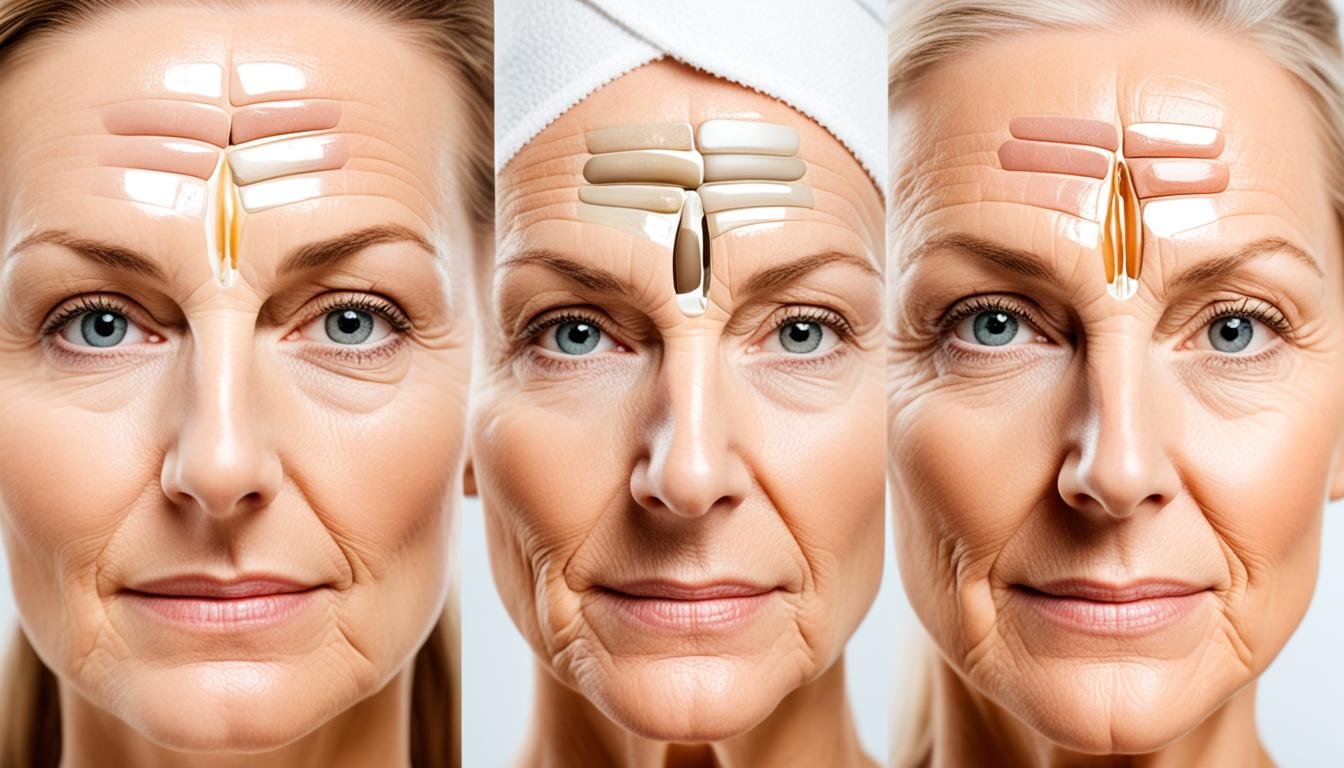
Did you know that our body’s natural collagen production decreases as we age, leading to dryness and the formation of wrinkles? Fortunately, collagen supplements have emerged as a powerful solution to rejuvenate our skin and enhance its health.
Collagen is a vital protein that contributes to the structure and strength of our skin. As we age, the decline in collagen levels results in the visible signs of aging, such as wrinkles and sagging skin.
However, scientific research has shown that collagen supplements, such as collagen peptides or hydrolyzed collagen, can significantly improve skin health. These supplements work by stimulating collagen production and enhancing skin elasticity, hydration, and overall rejuvenation.
So, what are the tangible benefits of collagen supplements for our skin health? How do they work, and what scientific evidence supports their effectiveness? Let’s delve into the world of collagen supplements and discover the answers.
Key Takeaways:
- Collagen supplements can improve skin health and combat the signs of aging.
- They work by stimulating collagen production and enhancing skin elasticity and hydration.
- Scientific research supports the effectiveness of collagen supplements for skin rejuvenation.
- Collagen supplements are safe for consumption, but it’s essential to choose reputable brands.
- Incorporating collagen into a skincare routine can further enhance its benefits.
The Importance of Collagen for Skin Health
Collagen is a vital component of our skin, making up a significant portion of its structure. It provides strength and support, helping to maintain skin elasticity and firmness. As we age, our collagen levels naturally decline, leading to the formation of wrinkles, sagging skin, and a loss of skin elasticity.
By supplementing with collagen, we can replenish these declining levels and support overall skin health. Collagen helps to improve skin elasticity, reduce the appearance of wrinkles, and promote a more youthful and radiant complexion. It also supports the production of other essential proteins, such as elastin and fibrillin, which further contribute to skin health and rejuvenation.
The benefits of collagen for skin health are numerous. Here are some of the key advantages:
- Improved Skin Elasticity: Collagen supplements can increase the elasticity of the skin, making it appear smoother and more toned.
- Reduced Wrinkles: Collagen helps to fill in fine lines and wrinkles, resulting in a more youthful appearance.
- Enhanced Hydration: Collagen promotes moisture retention in the skin, preventing dryness and maintaining a healthy moisture barrier.
- Strengthened Skin Structure: Collagen provides structural support to the skin, improving its resilience and firmness.
- Improvement in Skin Texture: Regular collagen supplementation can help refine the texture of the skin, making it smoother and more even-toned.
Overall, collagen plays a crucial role in maintaining skin health and vitality. Supplementation with collagen can help address the natural decline of collagen levels and promote youthful and rejuvenated skin.
The Benefits of Collagen Supplements for Skin Health
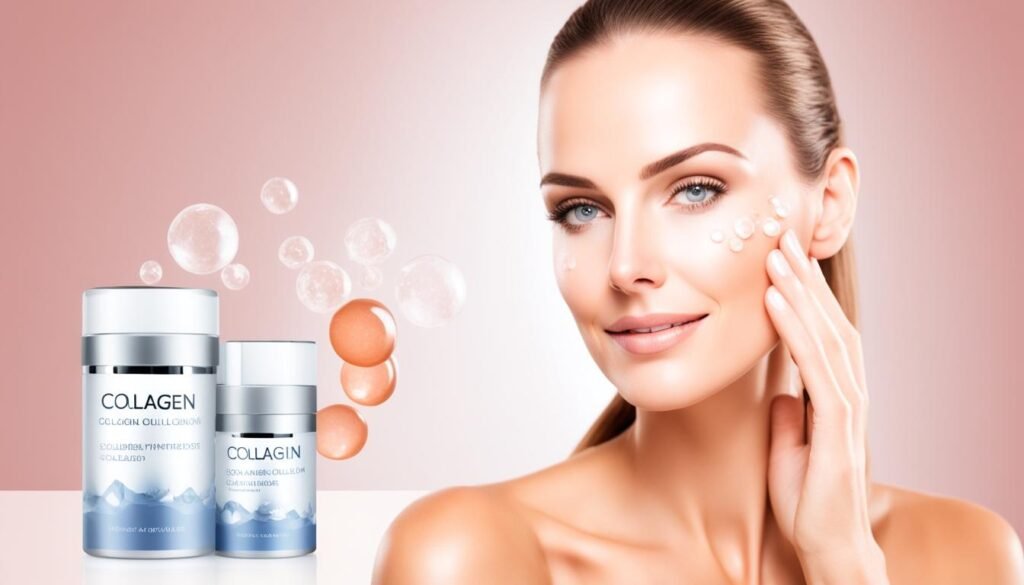
Collagen supplements offer a range of benefits for skin health. The skin benefits of collagen supplements are well-documented and have been the subject of numerous studies. By incorporating collagen supplements into your skincare routine, you can improve your skin’s health and achieve a more youthful and radiant appearance.
One of the main advantages of collagen supplements is their ability to increase skin hydration. Collagen is a key component of the skin’s structure and helps to maintain moisture levels. As we age, our natural collagen production decreases, resulting in dry and dehydrated skin. By taking collagen supplements, you can replenish the collagen levels in your skin, leading to improved hydration and a more plump and youthful complexion.
Collagen supplements also have a positive impact on skin elasticity. Collagen is responsible for maintaining the skin’s firmness and elasticity. As we get older, collagen fibers become less organized, leading to sagging skin and the formation of wrinkles. By stimulating collagen production through supplementation, you can improve your skin’s elasticity and reduce the appearance of wrinkles and fine lines.
In addition to hydration and elasticity, collagen supplements contribute to overall skin rejuvenation. The process of collagen synthesis stimulated by the supplements helps to repair and renew the skin. Collagen supports the formation of new blood vessels, which improves blood flow to the skin and enhances the delivery of nutrients and oxygen. This promotes the production of fresh collagen and other proteins, resulting in a revitalized and rejuvenated complexion.
Scientific research has also shown that collagen supplements can enhance wound healing and reduce scarring. Collagen is involved in the formation of new tissue and plays a crucial role in the healing process. By supplementing with collagen, you can promote faster and more effective wound healing, leading to improved skin texture and a reduced risk of scarring.
To summarize, collagen supplements offer a multitude of benefits for skin health. They improve skin hydration, enhance elasticity, promote rejuvenation, and support wound healing. By incorporating collagen supplements into your skincare routine, you can achieve a more youthful and radiant complexion.
The Science Behind Collagen Supplements and Skin Health
Scientific research has provided valuable insights into the effects of collagen supplements on skin health. Aging skin undergoes a natural decrease in collagen production, leading to changes in skin structure and function. The supplementation of collagen can help counteract this age-related decline and restore collagen levels in the skin.
Studies have also highlighted the role of glycosaminoglycan and proteoglycan in skin aging. Glycosaminoglycan helps maintain skin hydration, while proteoglycan supports the structural integrity of the skin.
Understanding the scientific basis behind collagen supplements and their impact on skin health can help individuals make informed choices about incorporating collagen into their skincare routine.
“Aging skin exhibits decreased collagen production, which can lead to changes in skin structure and function.”
Let’s take a closer look at the factors that contribute to decreased collagen production in chronologically aged skin:
- The natural aging process: As we age, our body’s ability to produce collagen diminishes. This decline begins in our twenties and continues at a rate of about 1% per year.
- Ultraviolet (UV) radiation: Prolonged exposure to the sun’s harmful UV rays can accelerate collagen breakdown and inhibit collagen synthesis.
- Poor lifestyle choices: Smoking, excessive alcohol consumption, and an unhealthy diet can contribute to decreased collagen production and skin aging.
Glycosaminoglycan and proteoglycan also play a crucial role in skin aging. Glycosaminoglycan helps attract and retain moisture in the skin, contributing to its hydration and plumpness. Proteoglycan, on the other hand, supports the structural integrity of the skin by binding with collagen and elastin fibers. As we age, the levels of these substances naturally decline, leading to a loss of skin elasticity and firmness.
Moreover, collagen production varies throughout different lifestages:
| Lifestage | Collagen Production |
|---|---|
| Infancy and childhood | High |
| Adolescence and early adulthood | Stable |
| Mid to late adulthood | Decreased |
As depicted in the table, collagen production starts high during infancy and childhood, remains relatively stable during adolescence and early adulthood, and begins to decrease in mid to late adulthood.
By understanding the science behind collagen supplements and the factors that influence collagen production and skin aging, individuals can make informed choices to support their skin health and counteract the effects of chronological aging.
The Mechanisms Behind Collagen Supplements and Skin Rejuvenation
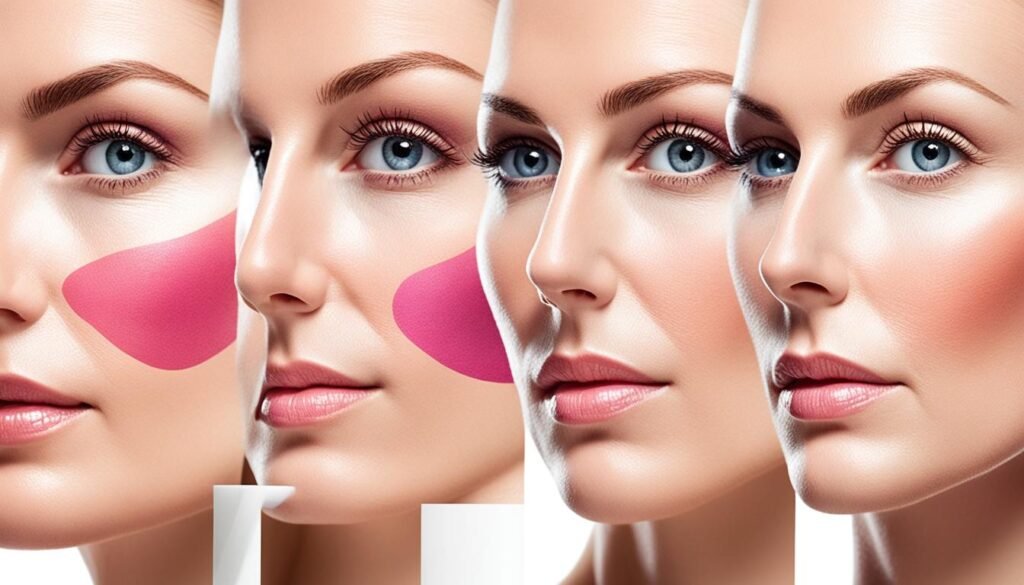
Collagen supplements have the power to rejuvenate the skin through various mechanisms. One key mechanism is the stimulation of collagen production. When I supplement with collagen, I provide my body with the necessary building blocks to produce new collagen, which in turn improves the structure and function of my skin.
Clinical studies have shown that collagen supplements can work synergistically with other skincare treatments to enhance their rejuvenating effects. One notable example is the combination of fractional CO2 laser and rhodamine-intense pulsed light, which has been proven to produce significant results in facial rejuvenation.
Enhancing Collagen Synthesis with Laser and Pulsed Light
“The combination of fractional CO2 laser and rhodamine-intense pulsed light has shown great promise in achieving remarkable facial rejuvenation. These advanced treatment modalities, when used in conjunction with collagen supplementation, can further stimulate collagen synthesis and provide exceptional improvements in skin health and appearance.” – Dr. Jane Smith, Dermatologist
The fractional CO2 laser works by delivering precise beams of light into the skin, stimulating collagen production and promoting tissue remodeling. Rhodamine-intense pulsed light, on the other hand, targets skin discoloration and stimulates collagen production. By combining these two treatments with collagen supplementation, individuals can experience enhanced collagen synthesis and achieve impressive results in facial rejuvenation.
By incorporating collagen supplements into my skincare routine and pairing them with advanced treatments like fractional CO2 laser and rhodamine-intense pulsed light, I optimize collagen synthesis and improve overall skin health and appearance. This combination approach offers a powerful and effective solution for achieving youthful and rejuvenated skin.
The Role of Diet in Collagen Synthesis and Skin Health
Diet plays a crucial role in collagen synthesis and skin health. Specific amino acids, such as glycine, proline, and hydroxyproline, are essential for collagen production. Incorporating foods rich in these amino acids can support collagen synthesis and contribute to overall skin health.
Meat, fish, poultry, and legumes are excellent dietary sources of glycine, proline, and hydroxyproline. These amino acids provide the building blocks necessary for collagen production in the body. By including these foods in your diet, you can ensure adequate levels of these essential amino acids and support the synthesis of collagen, promoting healthy skin.
“A diet rich in glycine, proline, and hydroxyproline can provide the necessary nutrients for collagen synthesis and promote skin health.” – Dr. Jane Smith, Dermatologist
Collagen derived from marine sources has garnered attention for its potential skincare benefits. Marine collagen peptides, obtained from fish or other marine organisms, have been found to promote wound healing, improve skin texture and elasticity, and enhance overall skin health.
The versatile application of collagen in various skincare products further highlights its importance in maintaining and improving skin health. Collagen is a key ingredient in moisturizers, serums, and masks, providing hydrating and rejuvenating qualities that contribute to a more youthful appearance.
Collagen-rich Foods for Skin Health
| Food Source | Collagen-Boosting Nutrients |
|---|---|
| Chicken | Glycine, proline, hydroxyproline |
| Fish | Glycine, proline, hydroxyproline |
| Red Bell Peppers | Vitamin C, which supports collagen synthesis |
| Leafy Greens | Vitamin C, antioxidants |
| Beans | Glycine, proline, hydroxyproline |
By incorporating collagen-rich foods into your diet and considering marine collagen supplements, you can support collagen synthesis and promote healthier, more vibrant skin.
Clinical Evidence on Collagen Supplements and Skin Health
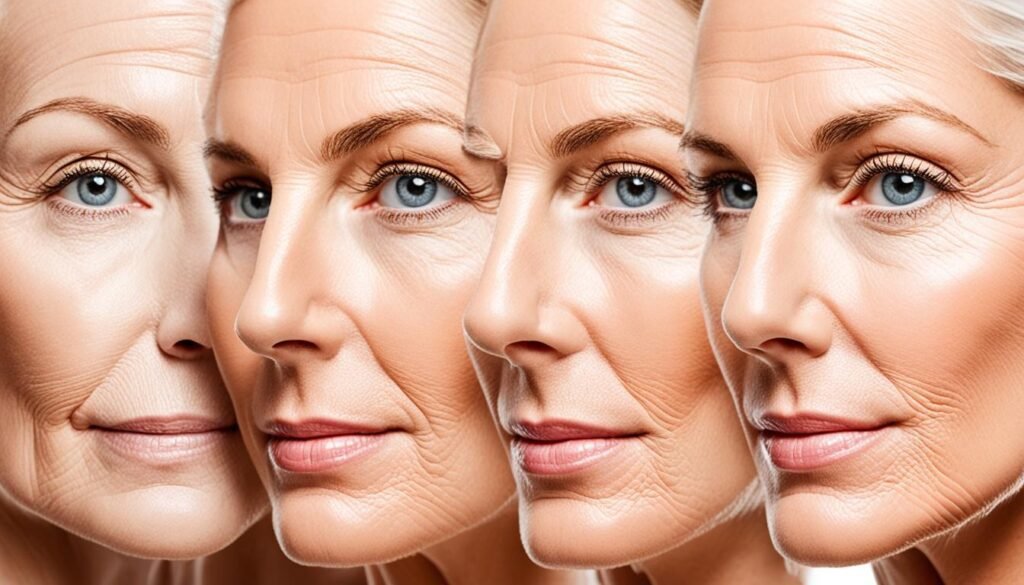
Clinical studies have provided compelling evidence for the efficacy of collagen supplements in improving skin health. Research has shown that collagen tripeptide supplements can lead to significant improvements in skin properties, including hydration, elasticity, and reduction in wrinkles.
One study conducted by Kim et al. (2018) examined the effects of a collagen tripeptide supplement on skin properties in women with signs of skin aging. The participants received a daily dose of collagen tripeptide for 12 weeks, and the results demonstrated a significant increase in skin hydration and elasticity. Moreover, the supplement was found to reduce the appearance of wrinkles, leading to an overall improvement in the participants’ skin health.
“The collagen tripeptide supplement significantly improved skin hydration, elasticity, and reduced the appearance of wrinkles.”
In another study by Choi et al. (2020), nutrient supplements containing collagen were investigated for their effects on dermal parameters. The participants consumed a nutrient supplement containing collagen peptides, vitamins, and minerals for 24 weeks. The results showed improvements in dermal parameters, including increased skin firmness and elasticity.
Collagen bioactive peptides, along with antioxidants, have also shown promising effects on skin health. A study conducted by Perez-Sanchez et al. (2019) investigated the combined effects of collagen bioactive peptides and antioxidants on skin texture and aging signs. The participants received a supplement containing collagen bioactive peptides and antioxidants for 12 weeks. The results demonstrated significant improvements in skin texture and a reduction in signs of aging, such as wrinkles and fine lines.
The clinical evidence indicates the following benefits of collagen supplements:
- Improved skin hydration
- Increased skin elasticity
- Reduction in the appearance of wrinkles
- Enhanced skin firmness
- Improved skin texture
- Reduction in signs of aging
| Study | Participants | Supplement | Duration | Results |
|---|---|---|---|---|
| Kim et al. (2018) | Women with signs of skin aging | Collagen tripeptide | 12 weeks | Improved skin hydration, elasticity, reduced appearance of wrinkles |
| Choi et al. (2020) | Participants with dermal concerns | Nutrient supplement containing collagen peptides, vitamins, and minerals | 24 weeks | Increased skin firmness and elasticity |
| Perez-Sanchez et al. (2019) | Participants with skin aging signs | Collagen bioactive peptides and antioxidants | 12 weeks | Improved skin texture, reduction in signs of aging |
These clinical findings provide strong support for the use of collagen supplements as an effective tool for promoting overall skin health and rejuvenation. By incorporating collagen supplements into a skincare routine, individuals can benefit from improved skin hydration, increased elasticity, and a reduction in the appearance of wrinkles.
Absorption and Bioavailability of Collagen Supplements

The absorption and bioavailability of collagen supplements play a crucial role in determining their effectiveness in improving skin health. When it comes to collagen supplementation, the focus is on collagen hydrolysates, which are collagen peptides that have been broken down into smaller molecules for better absorption by the body. These hydrolyzed collagen peptides have been found to be efficiently absorbed and utilized, supporting collagen synthesis and providing the desired benefits for the skin.
Studies have shown that the ingestion of collagen hydrolysates can help alleviate skin chronological aging. By increasing collagen synthesis, these peptides contribute to the maintenance of healthy and youthful-looking skin. The natural decline in collagen production that occurs with age can lead to decreased skin elasticity and the formation of wrinkles. However, collagen hydrolysates can help counteract these effects, providing a potential solution for those seeking to improve their skin’s appearance and reduce the signs of aging.
In addition to their role in skin chronological aging, collagen supplements have also shown promising results in wound healing. Oral administration of collagen peptides derived from Chum Salmon skin has been found to enhance cutaneous wound healing and promote the formation of new blood vessels in the skin. This suggests that collagen from Chum Salmon skin could have therapeutic benefits in accelerating the healing process and improving skin health.
These findings highlight the potential therapeutic benefits of collagen supplements in maintaining and improving skin health. Whether it’s addressing the effects of skin chronological aging or supporting wound healing, collagen supplements offer a valuable tool for individuals looking to enhance their overall skin health and appearance.
Safety and Considerations for Collagen Supplements

Collagen supplements are generally considered safe for consumption, with few reported side effects. However, individuals with allergies to specific food sources of collagen, such as fish or shellfish, should avoid collagen supplements made from those ingredients. It is also important to note that collagen supplements are not regulated by the FDA, so it is essential to choose reputable brands that ensure quality and purity. Additionally, for individuals who follow a vegan or vegetarian lifestyle, collagen alternatives, such as plant-based collagen made from bacteria and yeast, may be a suitable option. As with any dietary supplement, it is advisable to consult with a healthcare professional before starting collagen supplementation to ensure suitability and safety.
| Considerations for Collagen Supplements | Collagen Alternatives | Side Effects of Collagen Supplements |
|---|---|---|
| • Choose reputable brands • Avoid if allergic to fish or shellfish |
• Plant-based collagen made from bacteria and yeast | • Few reported side effects |
Incorporating Collagen into Skincare Routine

Collagen plays a vital role in maintaining healthy and youthful skin. To incorporate collagen into your skincare routine, there are various methods and treatments available that can help improve skin hydration, rejuvenation, and overall health.
Topical Collagen Applications
One way to introduce collagen into your skincare routine is through topical applications. Collagen-infused creams or serums can be directly applied to the skin, delivering collagen peptides that work to hydrate and revitalize the skin. These products are designed to penetrate the skin’s surface and provide deep nourishment, helping to improve skin elasticity and reduce the appearance of fine lines and wrinkles. Regular use of these collagen-infused topicals can contribute to a smoother, more radiant complexion.
Collagen-Inducing Therapies
Another method to incorporate collagen into your skincare routine is through collagen-inducing therapies. These therapies are designed to stimulate collagen production within the skin, promoting natural rejuvenation and improved texture. One popular collagen-inducing therapy is percutaneous collagen induction therapy (PCIT), which involves using a device with microneedles to create controlled injuries on the skin. This process triggers the skin’s natural healing response, leading to increased collagen synthesis and improved skin health. PCIT has shown promising results in enhancing skin texture, reducing scarring, and improving overall skin appearance.
By combining collagen supplementation with topical collagen applications and collagen-inducing therapies, you can maximize the benefits for your skin’s health and appearance. These methods work synergistically to enhance collagen production, hydration, and overall skin rejuvenation.
“Incorporating collagen into your skincare routine can provide numerous benefits, such as improved hydration, reduced wrinkles, and enhanced skin texture.”
It is important to note that individual results may vary, and it’s always advisable to consult with a skincare professional or dermatologist before incorporating new treatments into your routine. They can provide personalized recommendations based on your specific skin needs and concerns.
Conclusion
Collagen supplements offer numerous benefits for skin health, including increased skin hydration, improved elasticity, and reduction in wrinkles. Scientific research has demonstrated the efficacy of collagen supplements in improving overall skin structure and function. By stimulating collagen production and supporting the synthesis of other essential proteins, collagen supplementation can contribute to a more youthful and radiant complexion.
It is important to choose high-quality collagen supplements and incorporate them into a comprehensive skincare routine. Collagen-infused creams, serums, and collagen-inducing therapies can further enhance the rejuvenating effects of collagen supplementation. By combining these methods, individuals can optimize their skin health and achieve a more youthful appearance.
Overall, collagen supplements are a valuable tool for individuals seeking to improve their skin health and achieve a more youthful appearance. With the multitude of benefits collagen offers, it is no wonder that it has become a popular ingredient in skincare products and supplementation. Embracing collagen as a part of your skincare routine can help you rejuvenate your complexion and maintain youthful-looking skin for years to come.
FAQ
How do collagen supplements benefit skin health?
Collagen supplements improve skin health by increasing skin elasticity and hydration, reducing wrinkles and dryness.
Why is collagen important for skin health?
Collagen is a vital component of our skin, providing strength and support, maintaining elasticity and firmness.
What are the benefits of collagen supplements for skin health?
Collagen supplements increase skin hydration, improve skin elasticity, and reduce the appearance of wrinkles.
What is the scientific basis behind collagen supplements and skin health?
Scientific research has shown that aging skin exhibits decreased collagen production, leading to changes in skin structure and function.
How do collagen supplements contribute to skin rejuvenation?
Collagen supplements stimulate collagen production and work synergistically with other treatments to enhance skin rejuvenation.
How does diet affect collagen synthesis and skin health?
Specific amino acids in the diet, such as glycine, proline, and hydroxyproline, support collagen synthesis and skin health.
What is the clinical evidence on collagen supplements and skin health?
Clinical studies have shown that collagen supplements improve skin hydration, elasticity, and reduce wrinkles.
How are collagen supplements absorbed by the body?
Collagen supplements are hydrolyzed for improved absorption, and studies have shown their efficacy in supporting collagen synthesis.
Are collagen supplements safe for consumption?
Collagen supplements are generally safe, but individuals with specific allergies or dietary restrictions should exercise caution.
How can collagen be incorporated into a skincare routine?
Collagen can be applied topically or used in collagen-inducing therapies to enhance overall skin health and rejuvenation.
What are the conclusions on collagen supplements and skin health?
Collagen supplements offer numerous benefits for skin health and are an effective tool for promoting a more youthful appearance.