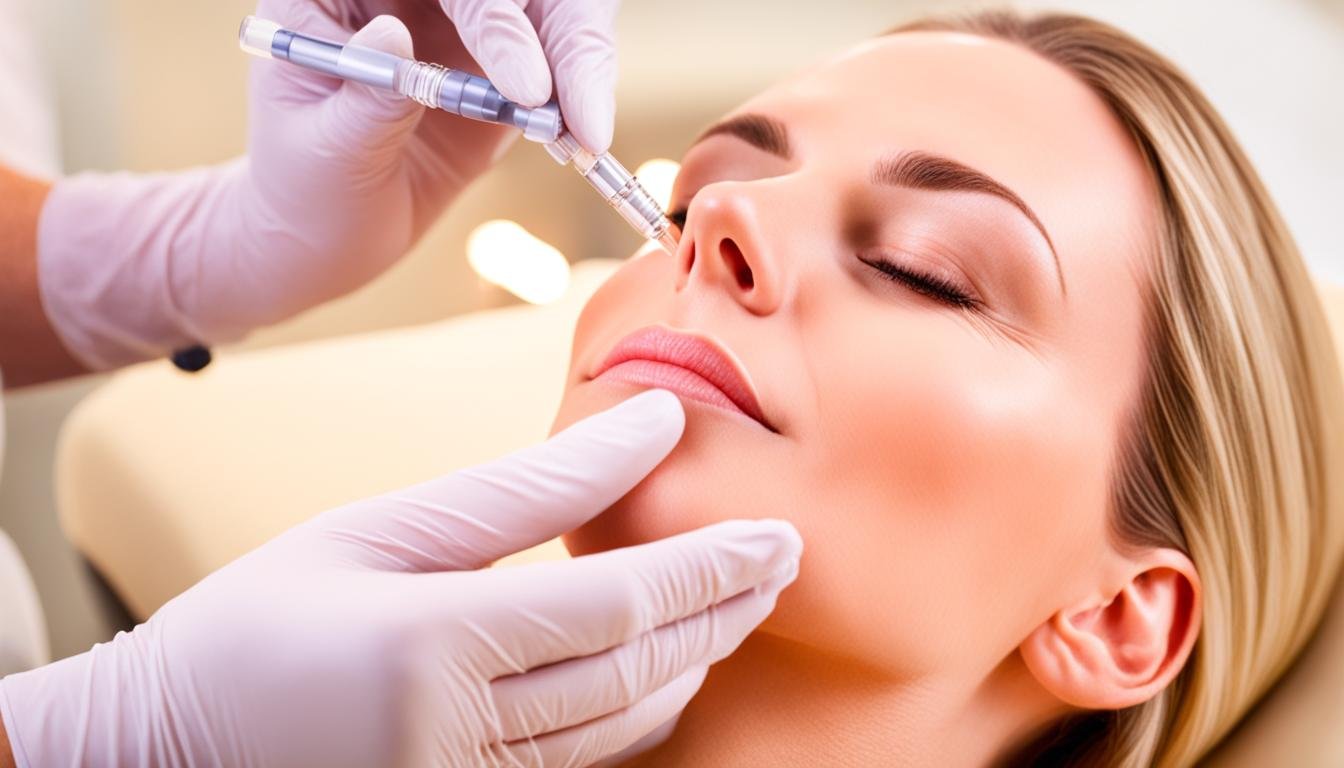
Did you know that Botox injections have been found to improve skin elasticity? A study conducted in Canada revealed that Botox treatments can make the skin more elastic, with the effects lasting as long as the Botox stays in the body. This surprising finding has sparked interest in the potential benefits of Botox for skin rejuvenation and firmness.
Key Takeaways:
- Botox injections have been shown to improve skin elasticity.
- The exact mechanism behind this improvement is still not fully understood.
- Repeated Botox treatments may have permanent effects on skin elasticity.
- Botox is a non-surgical option for enhancing skin elasticity and reducing the appearance of sagging skin.
- Further research is needed to fully understand the effects of Botox on skin elasticity.
What is Botox and How Does it Work?
Botox is a cosmetic treatment that utilizes the power of botulinum toxin to reduce the appearance of wrinkles and fine lines. This popular injectable has gained significant recognition for its ability to temporarily soften wrinkles and provide a smoother skin texture.
Infused with the magic of botulinum toxin, Botox works its wonders by blocking signals from the nerves to the muscles. This process effectively relaxes the targeted muscles, which in turn leads to a reduction in wrinkles and fine lines. By inhibiting muscle contractions, Botox achieves muscle relaxation, resulting in a more youthful and rejuvenated appearance.
With Botox, achieving a more youthful and wrinkle-free complexion has never been easier. By strategically targeting the muscles responsible for wrinkle formation, Botox works its magic to soften and smooth out wrinkles, ultimately revealing a firmer and more radiant skin.
The power of Botox lies in its ability to unleash the potential of botulinum toxin, a naturally occurring substance known for its muscle-relaxing qualities. By selectively paralyzing specific muscles, Botox effectively reduces the appearance of wrinkles and fine lines, providing individuals with a confidence boost and enhanced self-esteem.
Botox is a minimally invasive procedure that requires no extensive recovery time, making it a popular choice among individuals seeking a quick and effective solution for reducing the visible signs of aging.
Botox: A Key Player in Softening Wrinkles
When it comes to reducing wrinkles and fine lines, Botox is undoubtedly a game-changer. With its muscle-relaxing properties, Botox effectively targets and treats dynamic wrinkles, which are formed due to repetitive muscle movements.
The temporary relaxation of the facial muscles not only softens existing wrinkles but also prevents the formation of new ones. By interrupting the signals between the nerves and muscles, Botox creates a smoother, more youthful complexion, allowing individuals to regain their confidence and embrace a more radiant appearance.
| Botox Benefits for Wrinkle Reduction | Botox Treatment Areas |
|---|---|
| Reduces the appearance of crow’s feet | Eye area |
| Smooths out forehead lines and creases | Forehead |
| Softens frown lines between the eyebrows | Glabella (area between eyebrows) |
| Diminishes bunny lines on the nose | Nose |
| Reduces neck bands | Neck |
The Impact of Botox on Skin Elasticity

Recent studies have revealed the positive impact of Botox injections on skin elasticity. The relaxed state of the muscles, induced by Botox, facilitates the skin’s repair and rejuvenation process, resulting in improved elasticity. Moreover, Botox influences the production of collagen and elastin, two vital proteins responsible for maintaining the skin’s structure and elasticity.
Botox injections have been found to reduce muscle contractions, which leads to visible improvements in skin texture and firmness. By limiting repetitive muscle movements, Botox aids in preventing the formation of new wrinkles and fine lines.
While the exact mechanism behind Botox’s effect on skin elasticity is not fully understood, the findings suggest that the treatment stimulates collagen and elastin production, contributing to the overall health and rejuvenation of the skin.
Effects of Botox on Skin
The impact of Botox on skin extends beyond its muscle-relaxing properties. The treatment has been observed to enhance the skin’s texture and firmness, providing a smoother and more youthful appearance. The reduction in muscle contractions helps minimize the appearance of wrinkles and fine lines, resulting in a more rejuvenated and refreshed look.
“Botox injections have been shown to have a positive impact on skin elasticity, leading to improved skin texture, firmness, and overall skin health.”
– Study on the Effects of Botox on Skin Elasticity
In addition to its immediate benefits, Botox has also demonstrated long-term effects on skin elasticity. Studies have indicated that regular Botox treatments can lead to increased skin pliability and improved elasticity, contributing to the overall improvement of skin texture and reducing the formation of wrinkles over time.
| Effects of Botox on Skin Elasticity | Benefits |
|---|---|
| Improved skin texture | Smooth and refined skin appearance |
| Enhanced skin firmness | Tightened and lifted facial contours |
| Reduction in wrinkle formation | Minimized appearance of fine lines and wrinkles |
| Prevention of new wrinkles | Delaying the onset of aging signs |
Benefits of Botox for Skin Elasticity
When it comes to improving skin elasticity, Botox offers a range of benefits that make it an attractive option for many individuals. Not only is it a non-surgical treatment, but it also provides shorter recovery times compared to more invasive procedures. Let’s explore some of the key advantages of Botox for skin elasticity:
- Non-Surgical Skin Tightening: Botox is a non-invasive alternative to surgical procedures, making it an appealing choice for those who want to enhance their skin’s elasticity without going under the knife.
- Shorter Recovery Time: Unlike more extensive treatments, Botox requires minimal downtime. Patients can typically resume their daily activities shortly after the procedure, without the need for an extended recovery period.
- Improved Skin Texture: Botox injections can lead to improved skin texture, making the skin appear smoother and more youthful. The relaxation of the muscles provided by Botox allows the skin to repair and rejuvenate itself, resulting in a refined texture.
- Reduced Appearance of Fine Lines and Wrinkles: Botox is highly effective in reducing the visibility of fine lines and wrinkles. By targeting specific muscle groups, Botox can temporarily relax the muscles responsible for creating these signs of aging.
Botox offers a non-surgical option for improving skin elasticity, with shorter recovery times and noticeable improvements in skin texture and the reduction of fine lines and wrinkles.
With its impressive benefits, Botox continues to be a popular choice for those seeking to enhance their skin’s elasticity and achieve a more youthful appearance.
Safety of Botox for Skin Elasticity

When considering Botox as a treatment for improving skin elasticity, one of the key concerns is safety. It is important to note that Botox is a safe and FDA-approved procedure when administered by a qualified and experienced provider. The approval from the Food and Drug Administration (FDA) validates its efficacy and safety for enhancing skin firmness and reducing the visibility of wrinkles.
Botox injections should be performed by a trained professional who has a comprehensive understanding of facial anatomy and the proper injection techniques. Choosing a qualified and experienced provider ensures that the procedure is carried out with precision and minimizes the risk of complications.
It is important to note that Botox is not a permanent solution for skin elasticity. The effects of Botox typically last for several months before additional treatments are required to maintain the results. Regular follow-up appointments with a reputable provider are necessary to ensure optimal outcomes.
By prioritizing safety, FDA approval, and selecting a qualified provider, individuals can have the peace of mind knowing that they are undergoing a treatment that has been extensively studied and proven safe for enhancing skin elasticity.
| Benefits of Botox for Skin Elasticity | Concerns |
|---|---|
| Safe and FDA-approved treatment | Regular follow-up treatments required for maintenance |
| Performed by qualified and experienced providers | Importance of choosing a reputable provider |
| Temporary improvement in skin firmness and texture | Not a permanent solution for skin elasticity |
Long-Term Effects of Botox on Skin Elasticity
Regular Botox treatments have been shown to have long-term effects on skin elasticity. Patients who receive Botox injections experience increased skin pliability and elasticity, resulting in improved texture and firmness.
The relaxed muscles, achieved through Botox, allow the skin to repair and rejuvenate itself. This repair process leads to increased elasticity and improved skin texture over time. As a result, patients notice a reduction in wrinkle formation and the prevention of new wrinkles.
Botox works by limiting repetitive muscle movements that contribute to the development of wrinkles. By reducing muscle contractions, Botox helps to maintain the smoothness and firmness of the skin.
| Long-Term Effects of Botox on Skin Elasticity | Benefits |
|---|---|
| Increased skin pliability | Allows for improved flexibility and adaptability, resulting in a more youthful appearance. |
| Increased elasticity | Helps the skin to stretch and retract more effectively, reducing the visibility of fine lines and wrinkles. |
| Improved skin texture | Creates a smoother and softer surface, enhancing the overall look and feel of the skin. |
| Reduction in wrinkle formation | Minimizes the development of new wrinkles by limiting repetitive muscle movements. |
| Prevention of new wrinkles | Keeps the skin looking younger for longer by preventing the formation of new wrinkles. |
Comparing Botox with Other Treatments for Skin Elasticity
While Botox is a popular option for improving skin elasticity, there are several other treatments available. Dermal fillers, laser treatments, chemical peels, microneedling, and topical retinoids are all alternatives to Botox. Each treatment works differently and has its own pros and cons.
| Treatment | How it Works | Pros | Cons |
|---|---|---|---|
| Dermal Fillers | Plump up the skin to restore volume |
|
|
| Laser Treatments | Stimulate collagen production for improved skin texture and firmness |
|
|
| Chemical Peels | Remove dead skin cells to reveal smoother, younger-looking skin |
|
|
| Microneedling | Triggers collagen synthesis for improved skin elasticity |
|
|
| Topical Retinoids | Promote skin cell turnover and improve skin texture |
|
|
The choice of treatment will depend on individual preferences and desired outcomes. Consultation with a qualified professional is essential to determine the most suitable treatment option for improving skin elasticity.
Understanding Botox and Skin Elasticity
Botox, widely used for improving skin elasticity, is a popular treatment that delivers immediate benefits. By relaxing the muscles, Botox effectively reduces the appearance of wrinkles and fine lines, resulting in a more youthful aesthetic. The treatment also provides smoother skin and minimizes the visibility of fine lines. However, recent studies have uncovered the long-term effects of Botox on skin elasticity.
In addition to the immediate benefits, Botox’s impact extends beyond the surface. The relaxation of the muscles allows the skin to recover from constant movement-induced stress, promoting the preservation of two vital proteins: collagen and elastin. These proteins play a crucial role in maintaining skin elasticity and firmness. Botox helps sustain the long-term health and vitality of the skin by aiding in the prevention of age-related sagging and wrinkle formation.
Understanding the relationship between Botox and skin elasticity highlights the comprehensive effects of the treatment. By addressing both the immediate concerns and long-term preservation of skin quality, Botox offers a holistic approach to enhancing the youthfulness, smoothness, and overall health of the skin.
| Immediate Benefits of Botox for Skin Elasticity | Long-Term Effects of Botox on Skin Elasticity |
|---|---|
|
|
By combining the immediate benefits and long-term effects, Botox emerges as a comprehensive solution for individuals seeking to improve their skin elasticity. The treatment’s muscle relaxation properties contribute to both the immediate aesthetics and the preservation of skin quality over time. Consulting with a qualified professional can help determine if Botox is the ideal solution to address individual skin elasticity concerns.
Exploring Alternatives for Skin Elasticity
In addition to Botox, there are several other treatments available for improving skin elasticity. Let’s explore some of the alternatives:
- Dermal Fillers: These injections can plump up the skin, adding volume and reducing the appearance of fine lines and wrinkles.
- Laser Treatments: Laser therapy stimulates collagen production, helping to improve skin texture and elasticity.
- Chemical Peels: This procedure involves applying a chemical solution to the skin to remove the outer layers, promoting cell turnover and revealing fresh, rejuvenated skin.
- Microneedling: A process where tiny needles are used to create controlled micro-injuries in the skin, triggering collagen synthesis and promoting overall skin rejuvenation.
- Topical Retinoids: These vitamin A derivatives can help improve skin elasticity by promoting cell turnover and stimulating collagen production.
Each treatment option has its own advantages and limitations. It is essential to consult with a qualified professional to determine which alternative is most suitable for your individual needs and goals.
Here is an image that showcases some of the alternative treatments for skin elasticity:
Note: The image above highlights various treatments that can improve skin elasticity.
FAQs on Botox and Skin Elasticity
Here are some frequently asked questions about Botox and its impact on skin elasticity:
-
Does Botox help improve skin elasticity?
Botox has been shown to have positive effects on skin elasticity by increasing pliability and improving texture.
-
Are there any long-term effects of Botox on skin elasticity?
Yes, repeated Botox treatments have been found to have long-term benefits for skin elasticity, including improved texture and reduced wrinkle formation.
-
Is Botox safe for long-term use?
When administered by a qualified professional, Botox is considered safe for long-term use.
-
What is the optimal treatment frequency for Botox?
The optimal frequency of Botox treatments may vary depending on individual needs and treatment areas. Consult with a qualified provider to determine the best treatment schedule for your specific goals.
It is important to note that Botox should only be administered by a qualified professional to ensure its safety and effectiveness.
Conclusion
In conclusion, Botox is a safe and effective option for individuals seeking to improve their skin elasticity. With both immediate and long-term benefits, Botox offers a non-surgical alternative that can enhance skin texture, reduce the appearance of fine lines and wrinkles, and even prevent the formation of new wrinkles. Its non-invasive nature ensures a shorter recovery time compared to more extensive procedures, making it an attractive choice for those seeking a quick and convenient solution to rejuvenate their skin.
By consulting with a qualified provider, individuals can explore the possibilities and determine if Botox is the right fit for their unique skin elasticity concerns. With its demonstrated ability to stimulate collagen and elastin production, Botox can lead to an improvement in skin firmness and pliability, resulting in a more youthful and vibrant appearance.
Whether it’s for a special occasion or a long-term skin rejuvenation strategy, Botox offers a reliable and effective way to address concerns related to skin elasticity. Embrace the non-surgical option and enjoy the long-lasting benefits it provides, such as improved skin texture and firmness. Trust the expertise of a qualified provider to guide you towards optimal outcomes and embark on a journey towards youthful and revitalized skin.
FAQ
Does Botox help with skin elasticity?
Yes, Botox has been found to improve skin elasticity by making the skin more pliable and firm.
How does Botox work?
Botox works by blocking signals from the nerves to the muscles, causing the muscles to relax and reducing the appearance of wrinkles and fine lines.
What is the impact of Botox on skin elasticity?
Botox has a positive impact on skin elasticity by promoting collagen and elastin production, leading to improved skin texture and firmness.
What are the benefits of Botox for skin elasticity?
Botox is a non-surgical option that offers shorter recovery time and can improve skin texture, reduce the appearance of fine lines and wrinkles, and enhance overall skin health.
Is Botox safe for skin elasticity?
Botox is considered safe for long-term use when administered by a qualified and experienced provider.
What are the long-term effects of Botox on skin elasticity?
Regular Botox treatments can lead to increased skin pliability and elasticity, improved skin texture, reduced wrinkle formation, and prevention of new wrinkles.
How does Botox compare to other treatments for skin elasticity?
Botox offers a non-surgical alternative to treatments like dermal fillers, laser treatments, chemical peels, microneedling, and topical retinoids, each with their own advantages and limitations.
How does Botox impact skin elasticity?
Botox relaxes the muscles, allowing the skin to repair and rejuvenate, resulting in improved pliability, elasticity, and overall skin health.
What are the alternatives for improving skin elasticity?
Dermal fillers, laser treatments, chemical peels, microneedling, and topical retinoids are alternative treatments that can also help improve skin elasticity.
What are some frequently asked questions about Botox and skin elasticity?
FAQs include questions about the impact of Botox on skin elasticity, its long-term effects, safety considerations, and optimal treatment frequency.