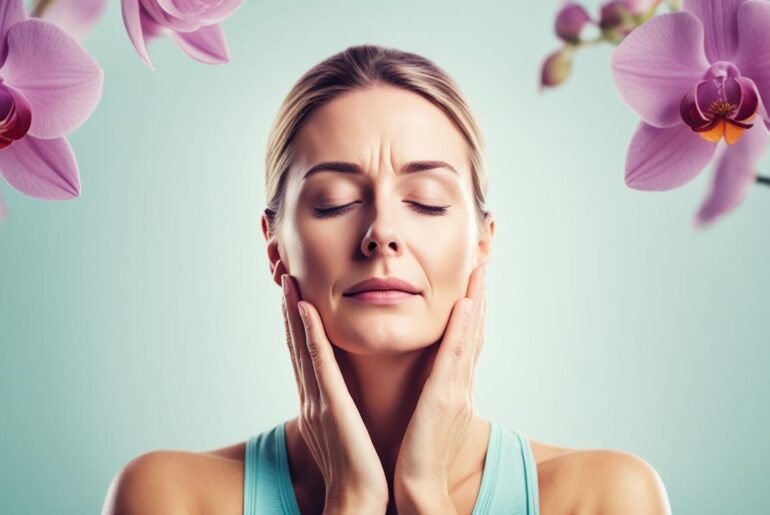
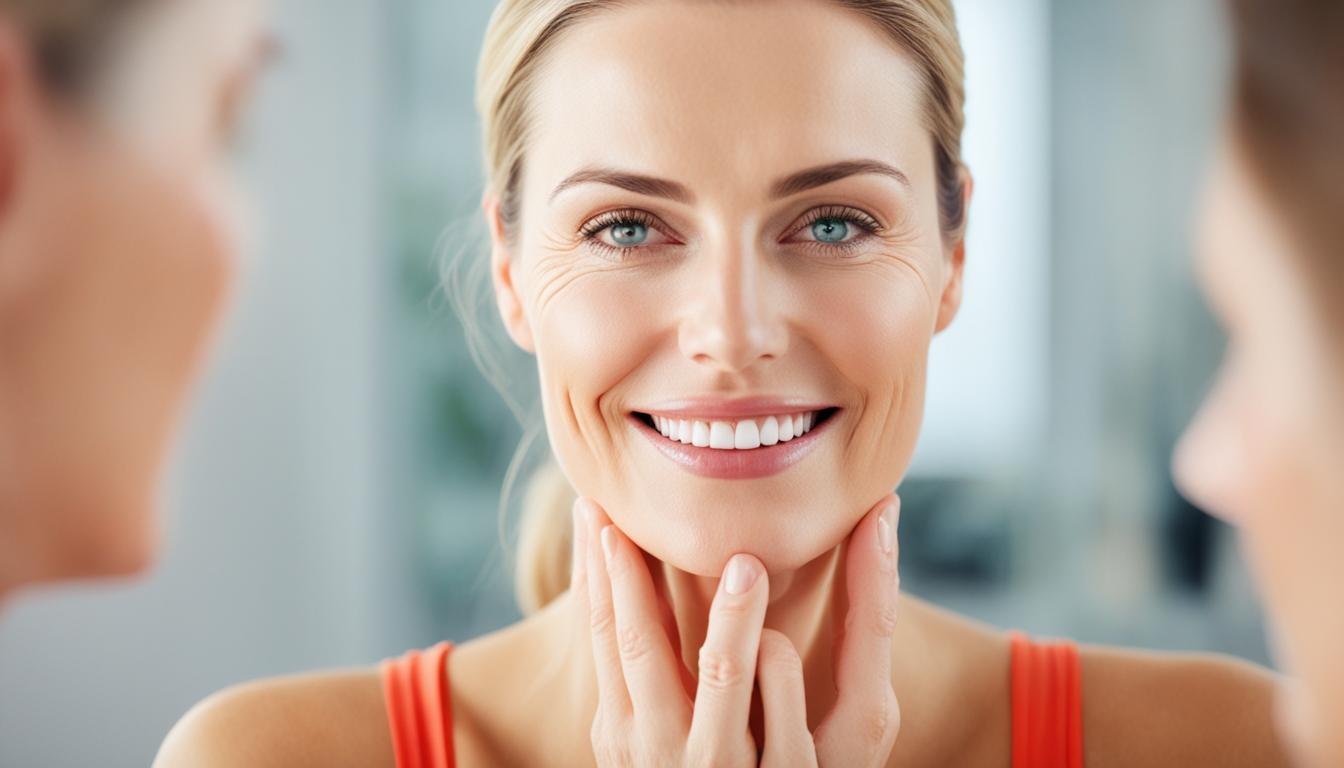
Did you know that facial exercises can help you achieve younger-looking skin? It’s true! In a recent pilot study, middle-aged women who followed a 20-week facial exercise program experienced improved fullness in their upper and lower cheeks. Not only that, but they also reported increased satisfaction with their facial appearance. These findings suggest that facial exercises have the potential to firm, tone, and enhance the elasticity of the skin, providing natural ways to combat aging.
Key Takeaways:
- Facial exercises have been shown to improve the fullness and appearance of the cheeks.
- They offer natural ways to combat aging and enhance the firmness and elasticity of the skin.
- Further research is needed to understand the mechanisms behind these benefits.
- Facial exercises can be easily incorporated into an at-home skincare routine.
- Regular practice and patience are key to seeing results from facial exercises.
What is Face Yoga?
Face yoga, also known as facial exercise, refers to the practice of performing strategic face movements using stretching and repetitive motion to activate skin cell regeneration, prevent saggy skin, and promote anti-aging skin care. It is a natural and non-invasive method that harnesses the power of facial muscles to rejuvenate the skin. By engaging in targeted exercises, the facial muscles are stimulated, which in turn promotes blood circulation and encourages the delivery of oxygen and nutrients to the skin cells.
Face yoga is based on the principle that just as physical exercise helps tone and sculpt the body, facial exercise can have similar effects on the muscles of the face. By working out the facial muscles, face yoga can help improve muscle tone, lift and firm sagging skin, and reduce the appearance of fine lines and wrinkles. Additionally, regular practice of face yoga can enhance the overall health and vitality of the skin.
It is important to approach face yoga with caution and follow proper techniques to avoid causing unnecessary tension or damage to the skin. It is recommended to learn face yoga poses from a qualified instructor who can guide you in performing the exercises correctly and safely.
To give you an idea of some commonly practiced face yoga exercises, here are a few examples:
- The Lion Face: Open your mouth wide, stick your tongue out as far as possible, and stretch your fingers towards your chin. Hold this pose for a few seconds before relaxing.
- The Cheek Lift: Smile widely while keeping your lips closed. Place your index fingers on the outer corners of your mouth and gently lift upwards to create resistance against the muscles. Hold for a few seconds and then release.
- The Forehead Smoother: Place both hands on your forehead with palms facing inward. Use your fingertips to gently smooth out any wrinkles or lines on your forehead, applying light pressure in an upward motion.
These are just a few examples, and there are many more face yoga exercises that can target different areas of the face. The goal is to create a routine practice of careful and intentional muscle stimulation, which can yield positive results in improving the youthfulness and overall appearance of the skin.
The Science Behind Face Yoga
Face yoga works by targeting the facial muscles, which play a crucial role in supporting the skin and maintaining its tightness and firmness. These muscles are connected to the skin through the extracellular skin matrix, which is composed of collagen and elastin fibers. Collagen provides structure and strength to the skin, while elastin allows for flexibility and elasticity. As we age, the production of collagen and elastin decreases, leading to the appearance of sagging and wrinkling.
By engaging in face yoga exercises, the facial muscles are stimulated and strengthened. This, in turn, helps support the extracellular skin matrix and promotes the production of collagen and elastin. With regular practice, face yoga can help improve muscle tone, enhance blood circulation, and stimulate the production of collagen and elastin fibers. This can result in firmer, more youthful-looking skin.
Face yoga offers a holistic approach to anti-aging skin care, combining physical exercise for the muscles with mindfulness and relaxation techniques. It provides a natural alternative to invasive procedures and costly treatments, allowing individuals to take an active role in improving the health and appearance of their skin through a regular face yoga practice.
Benefits of Face Yoga
Face yoga has gained popularity for its numerous benefits in promoting anti-aging skin care. Some of the key benefits include:
- Improved muscle tone and strength: Face yoga exercises target and strengthen the facial muscles, which can help lift and firm sagging skin.
- Increased blood circulation: By stimulating the facial muscles, face yoga promotes blood flow to the skin, delivering oxygen and nutrients for improved skin health.
- Enhanced skin cell regeneration: Face yoga stimulates the production of collagen and elastin, promoting the regeneration of skin cells and improving skin texture and elasticity.
- Prevention of saggy skin: Regular face yoga practice can help prevent the loss of skin elasticity and reduce the appearance of sagging skin.
- Reduced fine lines and wrinkles: The muscle-strengthening effects of face yoga can minimize the appearance of fine lines and wrinkles.
- Relaxation and stress relief: Face yoga incorporates relaxation techniques, providing a holistic approach to improving overall well-being and promoting a calm and rejuvenated mindset.
It is important to note that individual results may vary, and consistency is key when practicing face yoga. It is recommended to start with a few simple exercises and gradually increase the intensity and duration as you become more comfortable. Integrating face yoga into your daily skincare routine can be a natural and effective way to promote anti-aging and maintain the health and vitality of your skin.
Anti-Aging Benefits of Facial Exercises
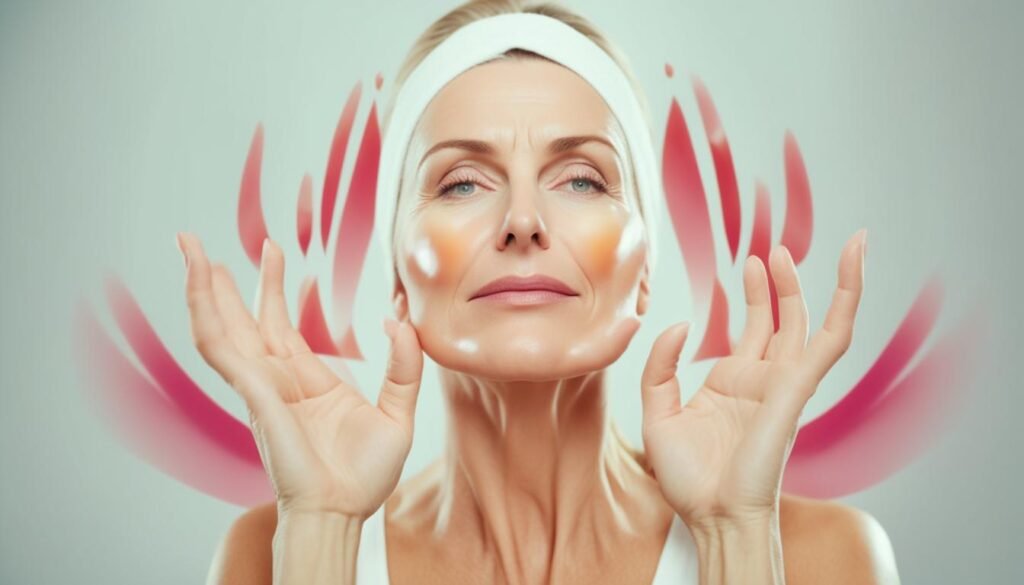
Facial exercises offer a range of anti-aging benefits beyond just improving the appearance of the skin. These exercises can be easily incorporated into your daily routine and can be done in the comfort of your own home, without the need for expensive gym memberships or equipment. By engaging the facial muscles through gentle movements and targeted exercises, you can achieve accessible anti-aging results.
One of the key benefits of facial exercises is their ability to serve as mini-massages for the face. As you perform these exercises, you’re not only stimulating the muscles but also releasing tension and promoting relaxation. This can be especially beneficial for individuals who carry stress in their facial muscles, leading to wrinkles and lines.
Moreover, facial exercises play a crucial role in promoting healthy blood flow. When you compress and contract the facial muscles during these exercises, you stimulate blood circulation, which in turn promotes cell turnover and the removal of dead skin cells. This process helps the skin shed old cells more rapidly, revealing fresher and healthier skin underneath. Additionally, improved blood flow can lead to tightened and lifted skin, reducing the appearance of sagging and giving you a more youthful complexion.
Take a moment each day to engage in these mini-massages and targeted exercises, and you’ll soon notice the anti-aging benefits they provide. Let’s explore some specific facial exercises in the following table:
| Facial Exercise | Targeted Area |
|---|---|
| The Brow Lift | Forehead, brow area |
| The Cheek Squeeze | Cheeks, mid-face |
| The Jawline Defined | Jawline, chin |
| The Lip Plumper | Lips, nasolabial folds |
| The Eye Opener | Eyes, crow’s feet |
| The Neck Lift | Neck, jawline |
By incorporating these facial exercises into your daily routine, you can promote healthy circulation, release tension, and achieve a more youthful and rejuvenated appearance. Remember to perform each exercise with care and follow proper technique to avoid any strain or damage to the skin. Consistency and patience are key, and over time, you’ll start to see the transformative effects of accessible anti-aging through facial exercises.
The Science in Your Face
The face is composed of 52 muscles that work together to express emotions and give the face its unique appearance. These facial muscles play a crucial role in our ability to smile, frown, and convey various expressions.
Supporting these facial muscles is the extracellular skin matrix, which consists of collagen and elastin fibers. Collagen provides structural support and helps maintain the skin’s firmness and elasticity, while elastin allows the skin to stretch and snap back into place.
However, as we age, the production of collagen and elastin naturally declines, resulting in substructural volume loss and skin laxity. This can lead to the formation of wrinkles, sagging skin, and a loss of facial contour.
Facial exercises aim to stimulate muscle growth and address these underlying issues. By targeting specific facial muscles, these exercises help increase muscle tone, which in turn can have a positive impact on the appearance of the skin.
| Facial Muscles | Extracellular Skin Matrix |
|---|---|
| Responsible for expressing emotions and facial movements | Consists of collagen and elastin fibers |
| Require muscle stimulation to maintain tone and strength | Provides support and elasticity to the skin |
| Help maintain facial contour and prevent sagging | Affects the firmness and texture of the skin |
| Can be targeted through facial exercises for muscle growth | Declines with age, leading to substructural volume loss |
Do Facial Exercises Work?

A clinical trial was conducted to assess the effectiveness of facial exercises in improving skin appearance. The study included healthy participants aged 40 to 65 with photodamage and mild to moderate facial atrophy. The participants received formal instruction on 32 facial exercises and performed them for 30 minutes a day for 8 weeks, followed by every other day for the next 12 weeks.
The results were measured using the validated Merz-Carruthers Facial Aging Photoscales and a participant satisfaction questionnaire. The study found that facial exercises resulted in significant improvements in upper cheek fullness, lower cheek fullness, and estimated participant age. Participants reported high satisfaction with the outcomes of the facial exercises.
These findings suggest that facial exercises can effectively improve overall skin appearance, providing visible benefits in terms of fullness and age reduction. The clinical trial demonstrates the positive impact of consistent and targeted facial exercises in addressing specific skin concerns and enhancing facial features.
By incorporating facial exercises into a regular skincare routine, individuals can potentially achieve a more youthful and rejuvenated appearance. These exercises serve as a proactive and natural approach to combat the effects of aging, helping individuals feel more confident and satisfied with their skin’s appearance.
The Routine
Incorporating facial exercises into a daily routine can be a simple yet effective way to improve the appearance of the skin. By dedicating just 10 minutes each day, you can enjoy the benefits of these six simple facial toning exercises:
- Brow Lift: Place your index fingers just above your eyebrows. Apply slight pressure and gently lift your eyebrows, holding for a few seconds before releasing. Repeat this exercise 10 times.
- Eye Squeeze: Close your eyes tightly and squeeze them shut for 5 seconds, then release. Repeat this exercise 10 times to tone the muscles around your eyes.
- Cheek Push-Ups: Place your index fingers on the apples of your cheeks. Push up with slight resistance, using your cheek muscles, and hold for 5 seconds. Repeat this exercise 10 times to strengthen your cheek muscles.
- Lip Plumper: Pucker your lips and press them together with some force, as if you were about to kiss the ceiling. Hold this position for 5 seconds and repeat 10 times to tone your lips and reduce fine lines around the mouth.
- Chin Lift: Place your fingers on your collarbone and tilt your head back, reaching your chin towards the ceiling. Hold for 5 seconds and repeat 10 times to strengthen the muscles in your neck and chin.
- Neck Stretch: Tilt your head to one side, bringing your ear towards your shoulder. Gently press your hand on the opposite side of your head, applying light pressure for a deeper stretch. Hold for 10 seconds on each side to release tension in your neck muscles.
Remember to perform these exercises in a slow and controlled manner, avoiding any abrupt or excessive movements. Performing these exercises consistently as a part of your daily routine can help improve muscle tone, promote blood circulation, and maintain a youthful appearance.
How Long Will it Take to See Results?
The timeline for seeing results from facial exercises can vary from person to person. Some individuals may start to notice improvements in their skin’s appearance in as little as two weeks.
To track progress and monitor the effectiveness of facial exercises, taking before and after photos is recommended. Regular check-ins provide visual evidence of the changes occurring in the skin and serve as a source of motivation to continue the routine. By comparing photos side by side, individuals can easily observe any visible changes as a result of their dedication to facial exercises.
Supporting the Skin as It Ages
In addition to facial exercises, there are other ways to support the skin as it ages. One essential aspect is maintaining a proper skincare routine. This includes hydrating delicate skin, taking care of the under-eye area, and using products that support the extracellular matrix (ECM).
Hydration plays a crucial role in preserving the skin’s health and elasticity. By incorporating moisturizers and hydrating serums into your skincare routine, you can replenish moisture levels, combat dryness, and promote a youthful appearance.
The under-eye area is particularly delicate and prone to showing signs of aging. To address this, consider using specialized eye creams or serums formulated to reduce puffiness, diminish dark circles, and smooth out fine lines and wrinkles.
Strengthening the ECM is another vital aspect of maintaining healthy and youthful-looking skin. The ECM provides structure and support to the skin, and as it ages, it tends to weaken. Look for skincare products containing ingredients like peptides, hyaluronic acid, and collagen boosters, which can help fortify the ECM, improve skin density, and minimize the appearance of wrinkles.
Massage is not only beneficial for facial exercises but can also be incorporated into your skincare routine. Gently massaging the face stimulates blood flow, improves lymphatic drainage, and helps relax facial muscles. Consider using a facial roller or practicing self-massage techniques to enhance the effectiveness of your skincare routine.
Nourishing sleep is an often overlooked but crucial factor in maintaining healthy skin. During sleep, the body repairs and rejuvenates itself, including the skin. Make sure to get enough restful sleep each night to give your skin the time it needs to regenerate and remain vibrant.
The Benefits of Supporting the Skin:
- Hydrating delicate skin maintains moisture levels and promotes a youthful appearance.
- Caring for the under-eye area reduces puffiness, dark circles, and signs of aging.
- Strengthening the ECM improves skin density and minimizes the appearance of wrinkles.
- Massage enhances blood flow, lymphatic drainage, and relaxation of facial muscles.
- Nourishing sleep allows the skin to repair and rejuvenate, promoting overall skin health.
Conclusion
After assessing the research on facial exercises, it is clear that they hold promise in improving the appearance of the skin and promoting anti-aging effects. However, it is important to note that more research is needed to fully understand the mechanisms behind these benefits and to determine the long-term impacts of facial exercises.
As with any skincare practice, caution should be exercised when performing facial exercises. It is crucial to follow proper techniques and guidelines to avoid causing any damage to the skin. Consulting a skincare professional or a qualified instructor can provide valuable insights and ensure that the exercises are performed correctly and safely.
That being said, incorporating facial exercises into a skincare routine can be a natural and effective way to enhance the elasticity, firmness, and overall appearance of the skin. As further research unfolds, we can look forward to a more comprehensive understanding of the long-term benefits and potential of facial exercises in the journey towards healthier, more youthful-looking skin.
FAQ
What are the benefits of anti-aging facial exercises?
Anti-aging facial exercises can help improve the appearance of the skin, firm and tone facial muscles, and increase skin elasticity. They can also provide mini-massages, release tension, promote relaxation, stimulate blood flow, and promote healthy circulation.
What is face yoga?
Face yoga, also known as facial exercise, refers to the practice of performing strategic face movements using stretching and repetitive motion to activate skin cell regeneration, prevent saggy skin, and promote anti-aging skin care.
What are the anti-aging benefits of facial exercises?
Facial exercises offer a range of anti-aging benefits, including improving the appearance of the skin, increasing skin firmness and toning, promoting healthy blood flow, reducing tension, and promoting relaxation.
How do facial exercises work?
The face is composed of 52 muscles and is supported by an extracellular skin matrix. Facial exercises stimulate muscle growth and address the decline of collagen and elastin fibers, leading to improved skin appearance, volume, and firmness.
Do facial exercises really work?
Clinical trials have shown that facial exercises can significantly improve skin appearance, including upper cheek and lower cheek fullness. Participants reported high satisfaction with the outcomes of facial exercises. However, more research is needed to fully understand the long-term effects.
What are some simple facial toning exercises?
Some simple facial toning exercises include cheek lifts, forehead smooths, eye squeezes, lip stretches, chin lifts, and neck stretches.
How long will it take to see results from facial exercises?
The timeline for seeing results from facial exercises can vary from person to person. Some individuals may start to notice improvements in their skin’s appearance in as little as two weeks. Regular progress monitoring is recommended.
How can I support my skin as it ages?
To support aging skin, you can follow a proper skin care routine that includes hydrating delicate skin, taking care of the under-eye area, and using products that support the extracellular matrix. Regular massage and nourishing sleep are also beneficial.
What are the conclusions on facial exercises?
Facial exercises have shown promising results in improving the appearance of the skin and promoting anti-aging effects. However, more research is needed to fully understand the mechanisms behind these benefits and to assess the long-term effects of facial exercises. Caution and following proper techniques are important to avoid any damage to the skin.